

There is no exact official total for how many boxers have died in the ring. The broadest historical boxing fatality records point to more than 2,000 deaths across professional, amateur, Toughman, and training contexts from 1724 onward. For modern professional boxing, the Professional Boxing Fatalities From 2000-2019 review, published through the Association of Boxing Commissions and based on ringside medicine research, found 100 total professional boxing deaths from 2000 to 2019, including 84 brain injury deaths during competition after exclusions. Many fighters did not die literally inside the ring, but later from injuries sustained during a bout.
Boxing fatality records are difficult to compare because different sources count different things. Some include only professional bouts. Others include amateur contests, training injuries, unsanctioned fights, and deaths that happened hours or days after the final bell. That is why the most accurate wording is usually “deaths from injuries sustained in the ring,” not only deaths that happened between the ropes.
This article looks at the numbers, why they vary, how boxing compares with wider combat sports fatalities, and 10 tragic cases that changed how people talk about fighter safety.
Table of contents
How Many Boxers Have Died in the Ring?
There is no universally accepted total for how many boxers have died in the ring. The number changes depending on the period, the type of bout, and whether the source includes deaths after the fight.
A historical list of deaths due to boxing injuries says that, in 1995, it was estimated that around 500 boxers had died from boxing injuries since the introduction of the Marquess of Queensberry Rules in 1884. The same source says 22 boxers died in 1953 alone and warns that its list is incomplete.
For modern professional boxing, one of the strongest available sources is the Professional Boxing Fatalities From 2000 to 2019 review presented through the Association of Ringside Physicians and shared by the Association of Boxing Commissions. It references the Manuel Velazquez Boxing Fatality Collection, identifies 100 total professional boxing deaths in that 20-year period, and narrows the main analysis to 84 professional boxing brain injury deaths during competition.
Key takeaway: boxing is much more regulated than it was in earlier eras, but fatal injuries still happen. The sport is safer than it used to be. It is not safe.


Why Boxing Death Counts Vary
The numbers vary because different sources use different definitions.
Some records count only professional fights. Others include amateur bouts, training deaths, unsanctioned contests, Toughman-style events, or deaths that occurred days after the fight. Older records are also incomplete, especially for regional bouts where medical reporting and press coverage were limited.
There is also a language problem. A fighter who dies in hospital after a bout may still be included in “in-ring death” discussions because the fatal injury happened during the fight. That is why the more accurate phrase is usually “died from injuries sustained in the ring.”
This is the main issue with the keyword itself. People search how many boxers have died in the ring, but the responsible answer has to explain what “in the ring” really means.
Boxing Deaths vs Combat Sports Fatalities
The wider discussion around combat sports fatalities includes boxing, MMA, kickboxing, Muay Thai, and other fight sports. Direct comparisons are difficult because the sports have different rules, different histories, and different reporting standards.
Boxing has a much longer recorded professional history than modern MMA, so its fatality record is larger and older. It also has a specific risk pattern: fighters can be knocked down, given a count, and allowed to continue. That is part of boxing’s drama, but it can also mean repeated head trauma across multiple rounds.
MMA has its own risks, but the fight-ending mechanics are different. Grappling, submissions, ground control, and referee stoppages change the injury profile. The same 2000 to 2019 boxing fatality presentation notes 19 deaths involving MMA athletes since 1998, including training, pre-bout, amateur, and professional contexts. It also notes 8 brain-related deaths, with 3 in professional regulated bouts.
That does not make one sport cleanly “safe” and the other “unsafe.” It means comparisons need discipline. Boxing’s longer history and repeated head-strike structure make its fatality record especially heavy, while MMA’s shorter modern record and different rules create a different risk profile.
The more useful point is simple: all combat sports need strong medical oversight, responsible matchmaking, emergency readiness, and honest reporting.
10 Tragic Cases of Boxers Who Died From Ring Injuries
This list is not ranked. It avoids graphic detail and focuses on what each case shows about boxing risk, safety, and history.
1. Andy Bowen
Andy Bowen died after his 1894 fight with Kid Lavigne. Historical records say Bowen hit his head on the wooden canvas after being knocked down in the 18th round, never regained consciousness, and died the following morning.
His case belongs to a much rougher era of boxing, when ring conditions and medical supervision were far from modern standards. It is also a useful reminder that early boxing danger was not only about punches. The ring environment itself could make a serious injury worse.

2. Walter Croot
Walter Croot died in 1897 after fighting Jimmy Barry. Records say Croot never regained consciousness and died the next day from a brain injury. The fatal injury was linked to his head striking an unpadded wooden floor.
This is one of those older cases where the sport’s infrastructure becomes part of the story. Modern ring padding, canvas standards, and emergency protocols did not appear by accident. They came from decades of hard lessons.

3. Tommy McCarthy
Tommy McCarthy died after fighting Owen Moran in 1910. Historical records list a fractured skull, with McCarthy dying the next morning.
The case reflects the early 20th-century boxing landscape: frequent fights, limited medical oversight, and a culture that often treated punishment as proof of toughness. McCarthy does not need a long dramatic retelling to make the point. His death sits in that wider pattern of a sport still learning how to protect its own athletes.

4. Frankie Campbell
Frankie Campbell died in 1930 after fighting Max Baer. Historical records say Campbell was knocked unconscious in the ring and died hours later in hospital.
Campbell’s case became one of boxing’s most discussed early tragedies, partly because Baer later became heavyweight champion and partly because the death followed him emotionally for years. It also shows that fatal boxing injuries affect more than one corner. The fighter, opponent, referee, trainers, family, and spectators all become part of a moment nobody wanted.
This is where the sport’s mythology breaks down. Boxing sells rivalry, intimidation, and damage. But no serious fighter enters the ring wanting that outcome.
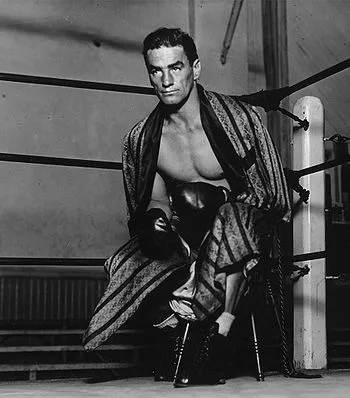
5. Ernie Schaaf
Ernie Schaaf died in 1933 after fighting Primo Carnera. Records say Schaaf suffered a knockout loss in the 13th round, fell unconscious, underwent surgery, and died four days later.
His case is often discussed in relation to accumulated damage, because Schaaf had taken punishment in prior bouts before the Carnera fight. That detail matters more than the final result. Boxing fatalities are not always caused by one isolated exchange. Sometimes the danger is cumulative: one hard fight, then another camp, then another night under the lights before the body has fully recovered.
Schaaf’s death fits one of the article’s central points. The final punch may be the visible moment, but the risk can be building long before it lands.

6. Benny “Kid” Paret
Benny “Kid” Paret died in 1962 after his third fight with Emile Griffith. Historical records list brain injuries, with Paret dying 10 days after the bout.
Paret’s death deserves more context because it became one of boxing’s most infamous safety flashpoints. The fight was televised, the stoppage came after sustained punishment, and the aftermath triggered serious public debate about whether boxing had become too comfortable with letting brave fighters take too much damage.
It also sharpened the conversation around referee responsibility. A fighter’s courage cannot be the only factor inside the ring. At some point, someone outside the damage has to make the decision the fighter may never make for himself.

7. Davey Moore
Davey Moore died in 1963 after fighting Sugar Ramos. Records say Moore collapsed after the fight and died 75 hours later.
Moore’s death came during a period of intense public debate about boxing safety. The case also shows why “died in the ring” can be misleading. The fatal injury happened during the contest, but the death came later.

8. Duk Koo Kim
Duk Koo Kim died after his 1982 world title fight with Ray Mancini. Records say Kim died four days after the fight from a subdural hematoma. His death is strongly associated with major safety changes, including the reduction of world championship fights from 15 rounds to 12.
Kim’s case deserves more space than most because it changed modern boxing. The old 15-round championship format had long been part of the sport’s identity, but it also extended the window for exhaustion, dehydration, and accumulated head trauma. After Kim’s death, boxing could no longer treat that extra championship distance as just tradition.
The tragedy also affected the public perception of boxing. It forced commissions, promoters, doctors, and broadcasters to confront a basic question: how much punishment should a sport allow in the name of drama?

9. Patrick Day
Patrick Day died in 2019 after suffering a traumatic brain injury in his fight with Charles Conwell. Contemporary reports said Day died four days after being knocked out, following emergency care in hospital.
Day’s death hit modern boxing hard because it happened in an era with more medical awareness, more regulation, and more public scrutiny. It was not an old black-and-white boxing tragedy from a different world. It happened in the modern media cycle, with fans, writers, and fighters able to process the news in real time.
His case is also a reminder that modern standards reduce risk, but cannot remove it. A bout can be sanctioned, supervised, and professionally staged, yet still end in catastrophic injury.

10. Kazuki Anaguchi
Kazuki Anaguchi died in February 2024 after suffering a subdural hematoma in his December 2023 fight in Tokyo, according to reports citing the Japan Boxing Commission. He was 23.
Anaguchi’s death is one of the most recent reminders that boxing fatalities are not just historical. Even in modern, regulated environments, a fighter can suffer catastrophic injury during a sanctioned bout.

What Usually Causes Boxing Deaths?
Most fatal boxing injuries are linked to head trauma, especially traumatic brain injury. A 2010 professional boxing mortality study, summarized in the Association of Ringside Physicians presentation, reviewed 339 professional boxing mortalities from 1950 to 2007. It found that 79% were associated with KO or TKO outcomes, including 64% with KO and 15% with TKO.
The injuries are often not instantly obvious. A boxer may look tired, hurt, or unsteady rather than critically injured. In severe cases, bleeding or swelling around the brain can worsen after the fight has ended.
Common risk factors include repeated head shots, late stoppages, weight-cutting stress, dehydration, poor recovery between fights, mismatches, and limited medical resources at smaller events. None of those factors guarantees a fatal outcome, but they help explain why safety protocols matter.
Has Boxing Become Safer?
Boxing has become safer than it was in earlier eras.
The sport now has shorter championship fights, more medical suspensions, ringside physicians, better emergency planning, improved ring conditions, and stronger regulation in major jurisdictions. The professional boxing fatality review from 2000 to 2019 points to a much lower modern fatality rate than historical averages, while still identifying brain-related deaths as a continuing risk.
The 2010 mortality summary also noted a significant decrease in deaths after 1983, with possible reasons including fewer fights per career, shorter careers, increased medical oversight, improved regulatory requirements, and the move away from 15-round championship fights.
Still, safer does not mean safe. Boxing is built around repeated strikes, often to the head. That makes medical supervision, referee judgment, responsible matchmaking, and post-fight monitoring central to fighter protection.
What Fight Fans Should Take From These Cases
The stories above show a pattern that is easy to miss when boxing is packaged as entertainment. Fatal injuries are rarely about one simple punch. They often involve accumulated damage, delayed symptoms, medical uncertainty, and decisions made under pressure by fighters, corners, referees, doctors, promoters, and commissions.
For fans, the takeaway is not to stop watching boxing. It is to watch with more respect for what is happening in front of us.
A fighter with a “great chin” is still absorbing damage. A dramatic late rally can be heroic and dangerous at the same time. A stoppage that feels early in the moment may look very different once you remember what the referee is trying to prevent.
That is where boxing asks more from its audience. The sport can still be thrilling, technical, emotional, and culturally important. But the risk should never be treated as background noise.
Final Word
So, how many boxers have died in the ring? The fairest answer is that no exact total exists. The broadest historical boxing fatality records point to more than 2,000 deaths across multiple boxing contexts, while modern professional boxing research identified 100 total deaths from 2000 to 2019, including 84 brain injury deaths during competition.
The numbers matter, but the wording matters too. Many fighters did not die literally in the ring. They died from injuries sustained there.
That distinction is more than technical. It reminds us that boxing’s danger does not always end when the bell rings.
For anyone who follows combat sports, the most respectful position is also the most honest one: enjoy the skill, understand the risk, and never forget that every fighter who steps through the ropes is taking on something real.
FAQs About Boxing Deaths
There is no definitive total. Broad boxing fatality records include more than 2,000 deaths across amateur, professional, Toughman, and training contexts from 1724 onward, while modern professional boxing research found 100 total professional boxing deaths from 2000 to 2019.
There is no fixed annual number. Fatalities were more common in earlier eras, while modern regulated professional boxing has a lower fatality rate. From 2000 to 2019, researchers identified 100 total professional boxing deaths across 428,904 professional bouts, including 84 professional boxing brain injury deaths during competition after exclusions.
Well-known cases include Benny “Kid” Paret, Davey Moore, Duk Koo Kim, Patrick Day, and Kazuki Anaguchi. Earlier historical examples include Andy Bowen, Walter Croot, Tommy McCarthy, Frankie Campbell, and Ernie Schaaf. Some died during or immediately after a bout, while others died later from injuries sustained in the fight.
The most common cause is serious brain trauma. A professional boxing mortality study found that most deaths were linked to knockout or technical knockout outcomes, with traumatic brain injury being the major concern.
There is no clean one-number answer. Boxing has a much longer recorded history and a larger fatality record. MMA has a shorter modern history and different risks because fights can end through submissions, grappling control, or strikes. One ringside medicine presentation notes 19 deaths involving MMA athletes since 1998 across training, pre-bout, amateur, and professional contexts, compared with 100 total professional boxing deaths from 2000 to 2019 in the boxing review.