
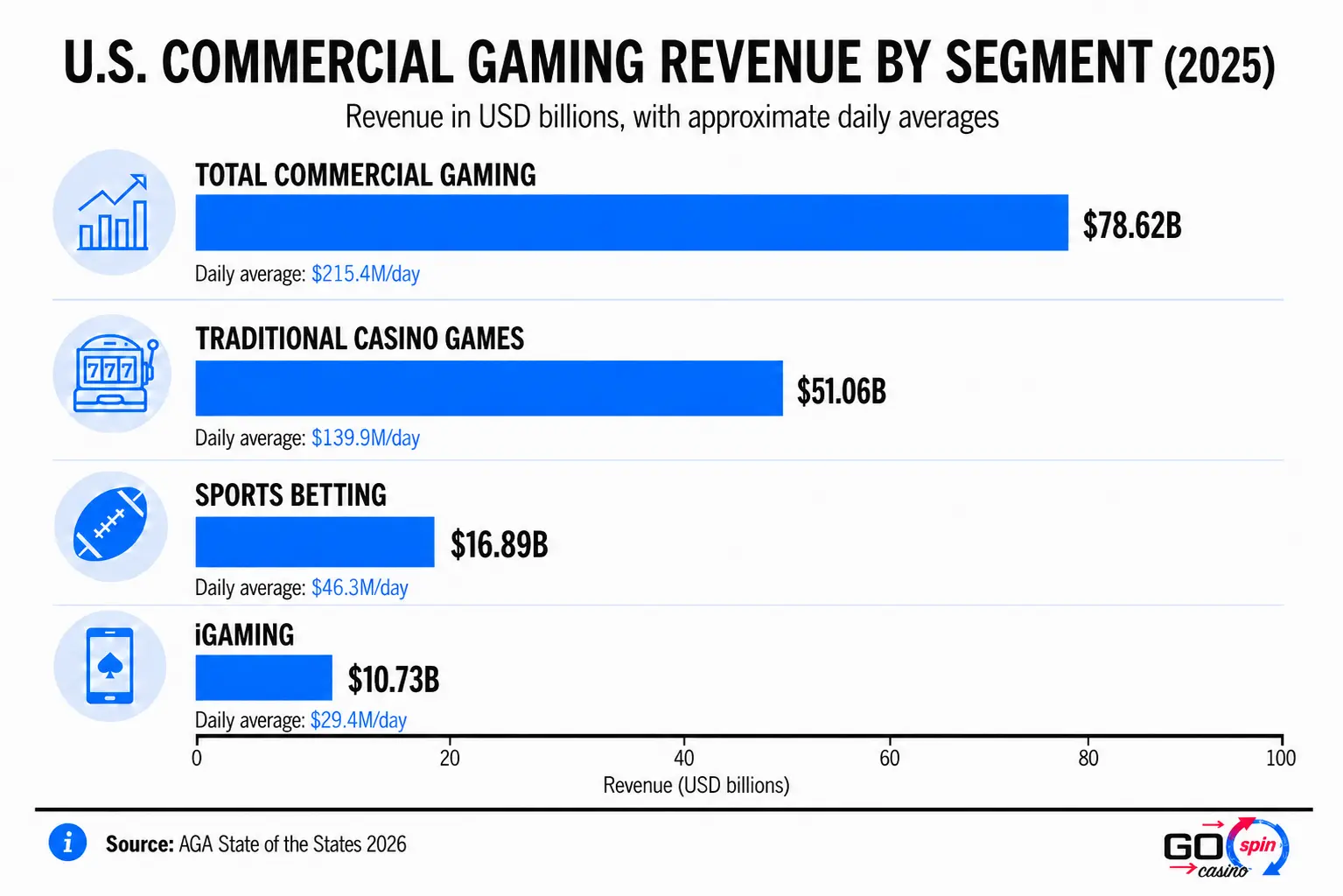
Kısa cevap: ABD’deki ticari kumar sektörü, 2025 yılında $78,62 milyar gelir, ki bu yaklaşık olarak $215,4 milyon günlük düzenlemeye tabi ticari kumarhaneler, spor bahisleri ve iGaming sektörlerinde. Geleneksel fiziksel kumarhane oyunları, $51,06 milyar, ya da yaklaşık $139,9 milyon günlük. Bu rakamlar, tek bir kumarhaneyi değil, ABD’deki ticari kumar pazarını ifade etmektedir ve bunlar, net kâr değil, gelir rakamlarını göstermektedir.
İnsanlar sorduğunda Kumarhaneler ne kadar kazanıyor?, genellikle üç farklı konuyu birbirine karıştırıyorlar: oyuncuların ne kadar bahis oynadıkları, kumarhanenin kazançları ödedikten sonra elinde ne kadar kaldığı ve vergiler, personel giderleri, lisans ücretleri, bonuslar, oyun sağlayıcıları, ödeme ücretleri ve pazarlama giderleri düşüldükten sonra ne kadar kâr kaldığı.
Bu rakamlar birbiriyle aynı değil.
Çevrimiçi kumar sektöründe bu tür bir kafa karışıklığını sık sık görüyorum. Bir kumarhane, muazzam bir gelir açıklayabilir, agresif müşteri ilişkileri yönetimi (CRM) kampanyaları yürütebilir, cazip ilk para yatırma (FTD) teklifleri sunabilir ve yine de çoğu oyuncunun beklediğinden daha dar bir kâr marjına sahip olabilir. Bir Vegas tatil köyünün dengelemesi gereken otel odaları, restoranlar, gösteriler ve ücretsiz ikramlar vardır. Bir çevrimiçi kumarhanenin ise her bir yüzde puanı için mücadele ettiği yazılım ücretleri, ortaklık anlaşmaları, bonus maliyetleri, dolandırıcılık kontrolleri ve müşteri tutma kampanyaları vardır.
Asıl sorulması gereken soru, paranın nereden geldiği ve nasıl kumarhane kâr modeli nasıl çalışır ve neden kumarhane gelir kaynakları Bir Las Vegas tatil köyü ile bir çevrimiçi kumarhane markasını karşılaştırdığınızda, aralarında büyük farklar göze çarpar.
İçindekiler
- Kumarhaneler Günde Ne Kadar Kazanıyor?
- Kumarhane Geliri ve Kumarhane Kârı
- Kumarhane Gelirleri Nereden Gelir?
- Vegas Casino ve Çevrimiçi Kumarhane Karşılaştırması
- Bir kumarhane günde ne kadar kâr ediyor?
- Oyunlara Göre Kumarhane Gelirleri: Hangi Oyunlar En Fazla Gelir Getiriyor?
- Bir kumarhane sahibi olmak ne kadar kazandırır?
- Oyuncular Kazansa Bile Kumarhaneler Neden Para Kazanmaya Devam Ediyor?
- Oyuncular, Kumarhane Kâr Modelinden Neler Öğrenebilir?
- Slot oyunları, geleneksel kumar gelirlerinin büyük bir kısmını oluşturur; bu nedenle RTP ve oynaklığı iyi anlamanız gerekir
- Bahis hacmi, bahis geliriyle aynı şey değildir
- Bonuslar satın alma maliyetleridir; bu nedenle, bir tüccarın riski değerlendirir gibi şartları dikkatle inceleyin
- Çevrimiçi kumarhaneler hızla büyüyor, ancak oyuncu değeri hâlâ tekrar yapılan para yatırma işlemlerinden kaynaklanıyor
- Kumarhane modelini oyuncu açısından görmek ister misiniz?
- Kumarhanelerin Ne Kadar Kazandığına Dair Sık Sorulan Sorular
- Veri Kaynakları
Kumarhaneler Günde Ne Kadar Kazanıyor?
Piyasa düzeyinde en net cevap, ABD’deki ticari kumar verilerinden geliyor.
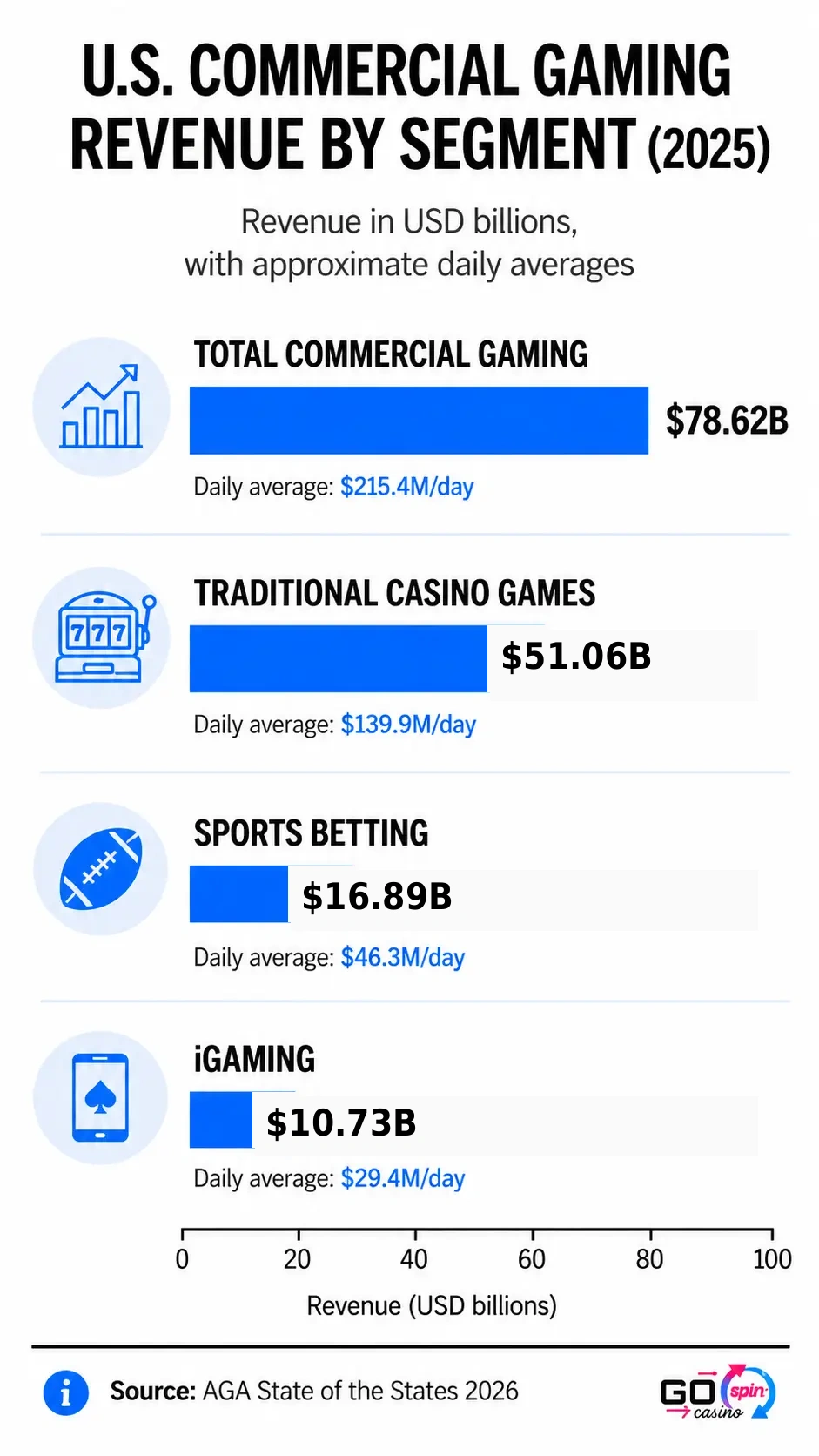
Amerikan Kumar Derneği’ne göre, ABD’deki ticari kumarhane sektörü şu rakamları açıkladı: 2025 yılında ticari kumar gelirleri $78,62 milyar olacak, yukarı 9.1% 2024'ten itibaren. Bu, yaklaşık $215,4 milyon günlük ticari kumarhane oyunları, spor bahisleri ve çevrimiçi kumar (iGaming) alanlarında.
Aynı rapora göre, 27 eyalette bulunan 493 ticari kumarhane mekanı oluşturulan $51,06 milyar 2025 yılında geleneksel kumarhane oyunlarından elde edilecek gelir. Buna elektronik oyun cihazları ve masa oyunları da dahildir ve bu rakam yaklaşık olarak $139,9 milyon günlük geleneksel ticari kumarhane oyunları için.
Bu rakamlar ABD’ye özeldir. Avrupalı okuyucular, bunları küresel bir ortalama olarak değil, düzenlemelere tabi ABD ticari piyasası için bir referans noktası olarak değerlendirmelidir. Birleşik Krallık, Avrupa, Makao veya denizaşırı çevrimiçi piyasalardaki kumarhane gelirleri, vergi oranları, lisans kuralları, oyun çeşitliliği, oyuncu davranışları ve raporlama standartlarının büyük ölçüde farklılık göstermesi nedeniyle oldukça farklı görünebilir.
Tek bir kumarhanenin günlük geliri binlerce ile milyonlar arasında değişebilir. Bu rakam, tesisin büyüklüğüne, konumuna, yaya trafiğine, turizm faaliyetlerine, çevrimiçi trafiğe, oyun çeşitliliğine, oyuncu sayısına, vergi yapısına ve müşteri sadakatine bağlıdır.


Kumarhane Geliri ve Kumarhane Kârı
Çoğu kişinin yanlış bildiği sayı budur.
Bir kumarhane, oynanan her doları elinde tutmaz. Para, kâr haline gelmeden önce bir süreçten geçer.

Kulp
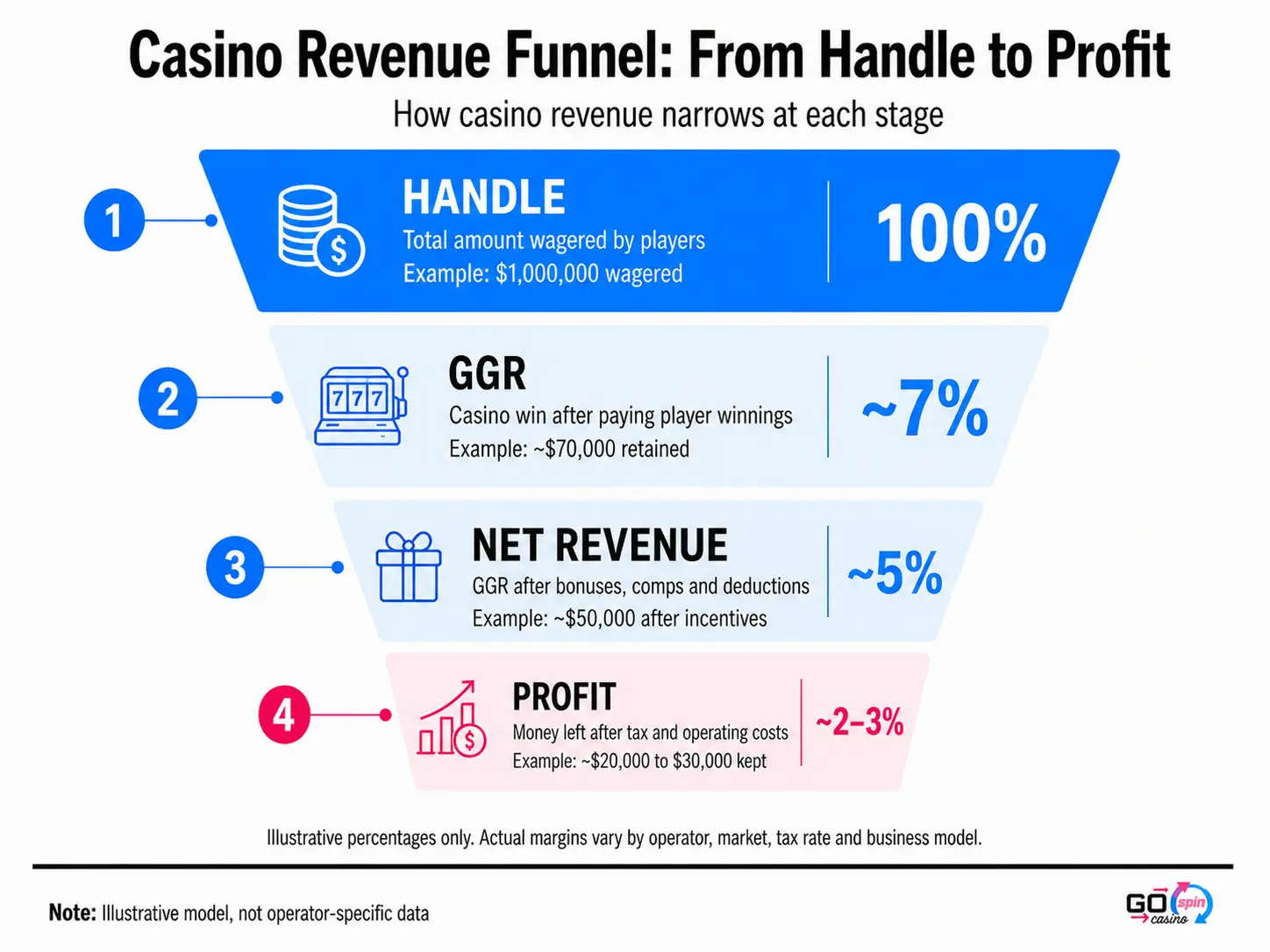
“Handle”, oyuncuların yatırdığı toplam bahis tutarıdır. Kulağa etkileyici gelse de, bu tutar kumarhanenin elinde kalan miktar değildir.
Bir bahis şirketi $10 milyon tutarında bahis kabul ederse, bu paranın büyük bir kısmı kazanan bahisçilere geri döner. İşletmeci, sadece bahis hacmini değil, tutar ve GGR’yi de önemser.
Aynı ilke kumarhane oyunları için de geçerlidir. Bir slot makinesi muazzam miktarda bahis hacmini işleyebilir, ancak işletmeci, kazançlar ödendikten sonra sadece kâr marjını elinde tutar.
Brüt Kumar Geliri
Brüt kumar geliri (GGR), kumarhanenin oyuncuların kazançlarını ödedikten sonra, işletme kesintileri yapılmadan önce elinde kalan tutardır.
Örneğin, oyuncular slot makinelerinde $1 milyon bahis yaparsa ve kumarhane kazanç olarak $930.000 geri öderse, GGR $70.000 olur. Bu örnek basitleştirilmiştir, ancak kumarhane gelirinin ardındaki mantığı göstermektedir.
Slotlar, masa oyunları, spor bahisleri ve iGaming, GGR’yi farklı şekillerde oluşturur. Slotlar, RTP ve hacme bağlıdır. Blackjack, kurallara ve oyuncunun kararlarına bağlıdır. Spor bahisleri, oranlara, sonuçlara ve tutma oranına bağlıdır. Çevrimiçi kumarhaneler ise büyük ölçüde tekrarlanan para yatırma işlemlerine, oyun çeşitliliğine, CRM’ye ve LTV’ye bağlıdır.
Net Gelir
Net gelir, promosyonlar ve kesintiler düşüldükten sonra elde edilir.
Bir kumarhane yüksek brüt oyun geliri (GGR) gösterebilir, ancak bununla birlikte bonuslar, ücretsiz dönüşler, nakit iadesi, VIP ödülleri, ücretsiz hizmetler ve diğer oyuncu teşviklerini de hesaba katmak zorundadır. Çevrimiçi kumarhaneler, müşteri edinmenin maliyetli olması nedeniyle bu durumu oldukça yoğun bir şekilde hissederler. İlk para yatırma (FTD) teklifleri, ortaklık anlaşmaları ve CRM kampanyaları, gerçek kâr marjını düşürebilir.
100% eşleştirme bonusu bir oyuncu teklifi olmakla birlikte, operatör açısından da maliyetli bir müşteri tutma aracıdır. Kumarhane, para yatırma sıklığını, oturum süresini ve uzun vadeli değeri artırma fırsatı karşılığında bu bedeli ödemektedir.
Kâr
Kâr, işletmenin personel giderleri, kumar vergileri, lisans ücretleri, mevzuata uygunluk maliyetleri, yazılım giderleri, oyun sağlayıcılarına yapılan ödemeler, ödeme işlemleri, dolandırıcılık önlemleri, ortaklık komisyonları, pazarlama, CRM, VIP promosyonları, güvenlik, teknoloji, gayrimenkul giderleri ve yeniden yatırım giderlerini karşıladıktan sonra geriye kalan tutardır.
İşte bu yüzden kumarhane kâr modeli çoğu oyuncunun beklediğinden daha karmaşıktır. Kumarhaneler matematik üzerine kuruludur, ancak aynı zamanda operasyonel disiplin üzerine de kuruludur.
Kumarhane Gelirleri Nereden Gelir?
Kumarhane gelir kaynakları pazara göre değişiklik gösterse de temel kategoriler sabittir: slot makineleri, masa oyunları, poker, spor bahisleri, çevrimiçi kumarhane oyunları ve tatil köyü tesisleri için kumar dışı gelirler.
Kumar Makineleri
Slotlar genellikle satış hacminin ana kaynağıdır.
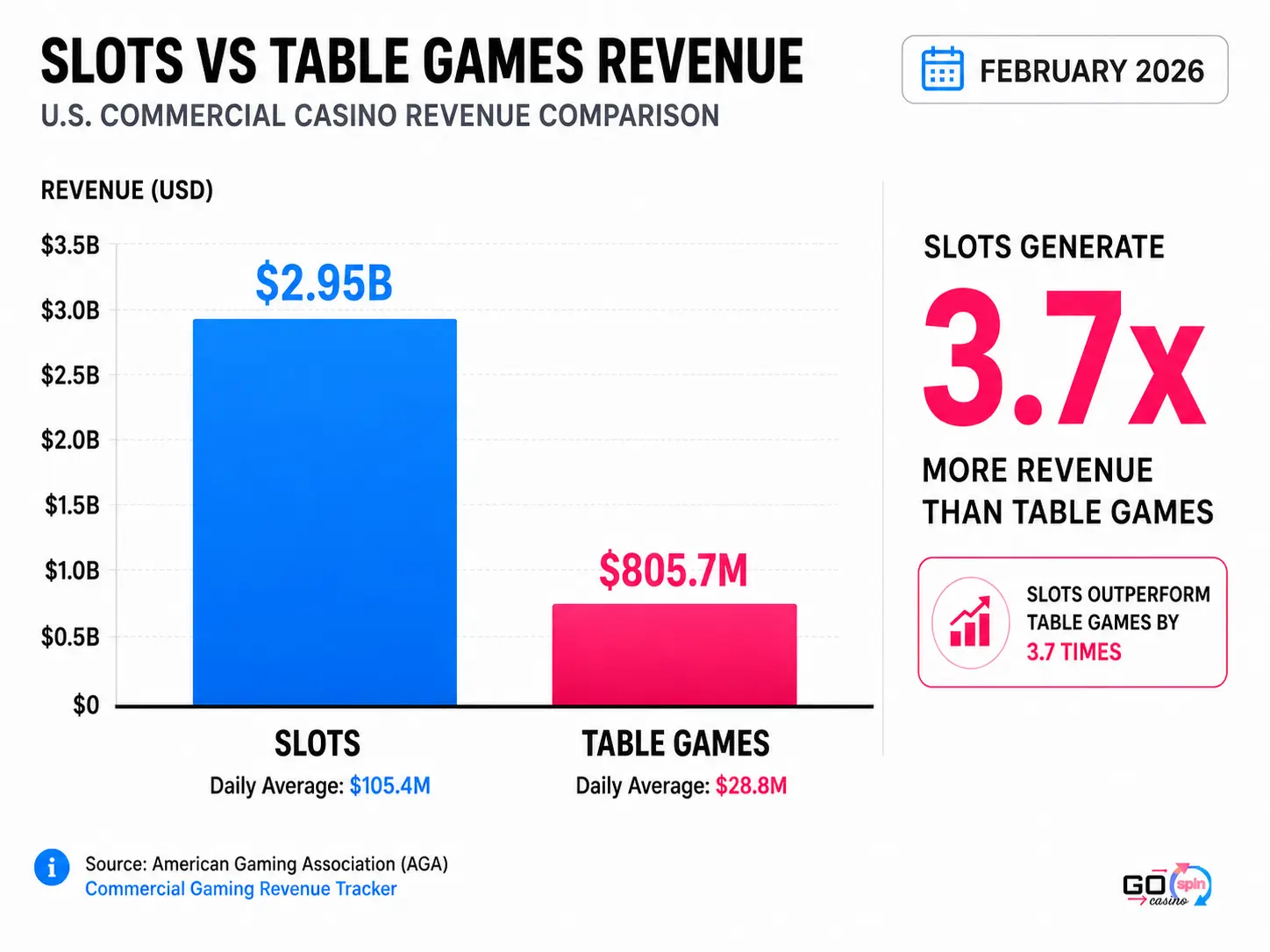
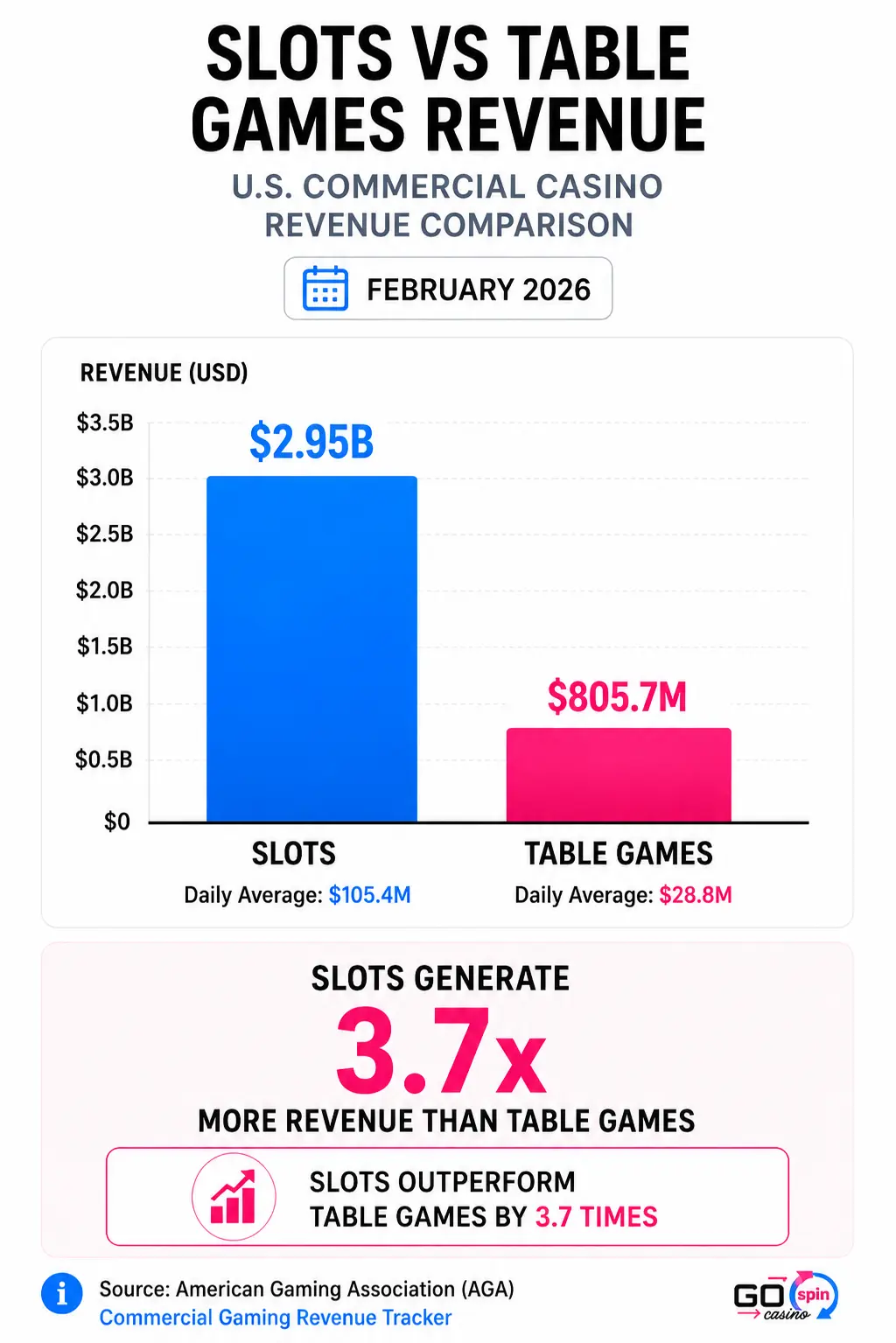
Şubat 2026’da, ABD’deki ticari slot makineleri $2,95 milyar gelir olarak. Masa oyunları... $805,7 milyon aynı ay içinde. Slot makinelerinden elde edilen gelir yaklaşık olarak 3,7 kat söz konusu raporlama döneminde masa oyunlarından daha fazla gelir elde etti.
Bu fark, slot makinelerinin neden bu kadar geniş bir alanı kapladığını açıklıyor.
Slot makineleri krupiye gerektirmez, gün boyu çalışabilir ve hem ara sıra oynayan oyuncuları hem de yüksek hacimli düzenli oyuncuları cezbeder. Çevrimiçi ortamda ise bu mantık daha da geniş bir ölçeğe ulaşır. Dijital bir slot lobisi, düzinelerce stüdyodan binlerce oyuna ev sahipliği yapabilir ve bu oyunlarda RTP, oynaklık, temalar, ikramiyeler ve bonus mekanizmalarına göre filtreleme imkânı sunar.
Bu farkın kullanıcı açısından görünen tarafı, şu kılavuzumuzda ayrıntılı bir şekilde ele alınmıştır: Çevrimiçi slotlar ve gerçek mekan slotları, özellikle RTP görünürlüğü, oynaklık ve fiziksel makinelerle çevrimiçi oyunlar arasında oturum ritminin nasıl değiştiği konularında.
Masa Oyunları
Masa oyunları, ortam yaratır ve daha etkileşimli bir oyun deneyimi sunar.
Blackjack, rulet, bakara ve craps gibi oyunlar, krupiye, salon denetimi ve daha fazla operasyonel kontrol gerektirir. Ayrıca, özellikle VIP stratejisinin uygulandığı durumlarda, kısa vadede daha büyük dalgalanmalara yol açabilirler.
Bakara buna çarpıcı bir örnektir. Birkaç yüksek limitli oyuncu, bir kumarhanenin o günkü masa oyunu sonuçlarını etkileyebilir. Blackjack ise farklı bir zorluk getirir; çünkü güçlü temel stratejiyi kullanan yetenekli oyuncular, kumarhanenin avantajını azaltabilirler.
Operatörler açısından masa oyunları sadece kumarhane avantajı ile değerlendirilmez. Personel maliyetleri, bahis limitleri, oyuncu kalitesi, doluluk oranı ve oynaklık da önemli faktörlerdir.
Poker Salonları
Poker, kumarhanenin genellikle müşteriye karşı oynamaması nedeniyle farklıdır.
Oyuncular birbirleriyle rekabet ederken, kumarhane ise komisyon, zaman bazlı ücretler veya turnuva ücretleri yoluyla gelir elde eder. Poker salonları, metrekare başına gelir açısından her zaman slot makinelerini geride bırakmayabilir, ancak sadakat, etkinlikler, kalma süresi ve marka güvenini destekler.
Çevrimiçi pokerde de aynı zorluk, farklı bir biçimde karşımıza çıkar: likidite. Yeterli sayıda aktif oyuncu olmadan, ürün ivmesini kaybeder.
Spor Bahisleri
Spor bahisleri, bahis hacminin çok büyük görünebilmesi nedeniyle sıklıkla yanlış anlaşılır.
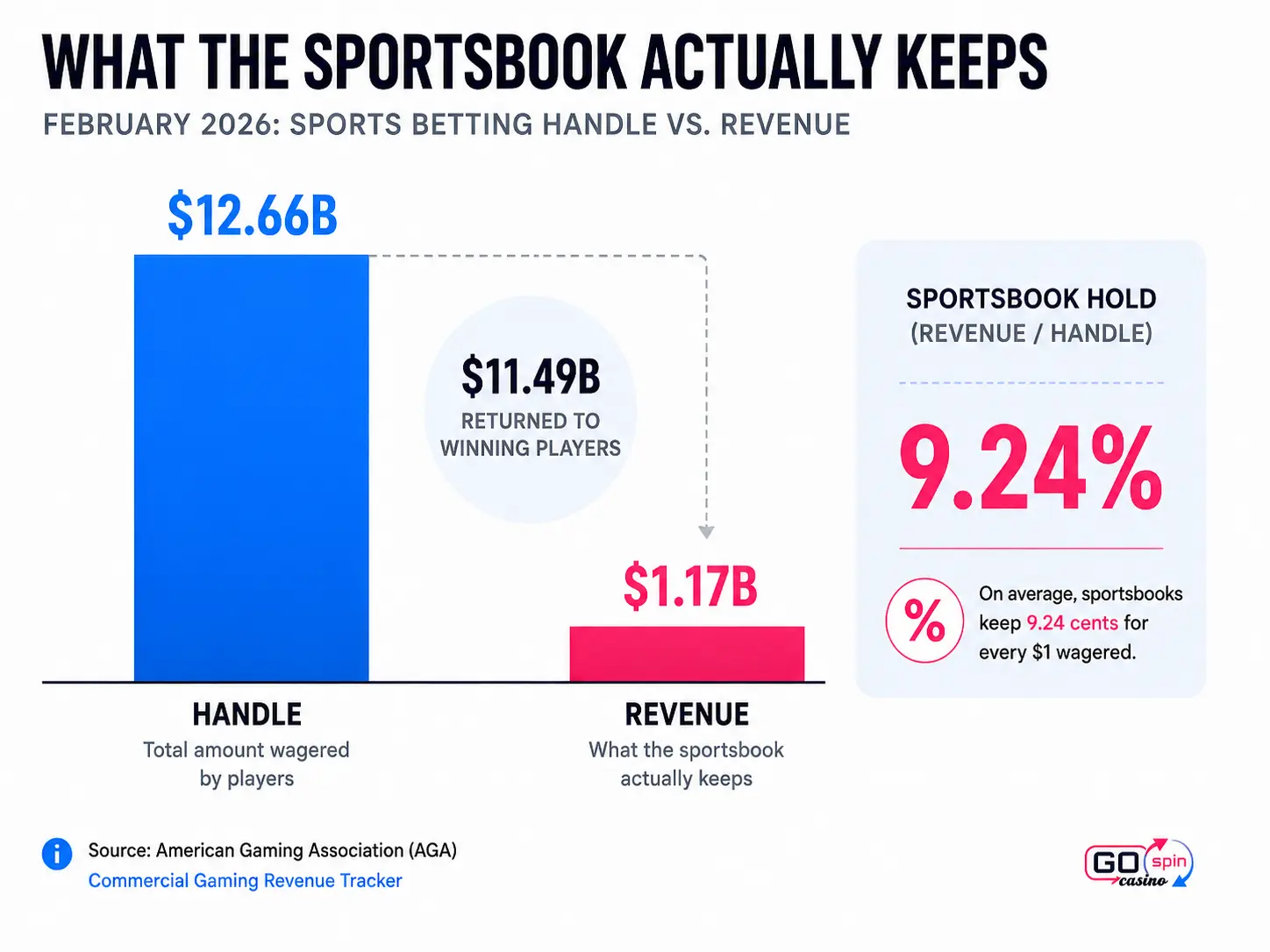
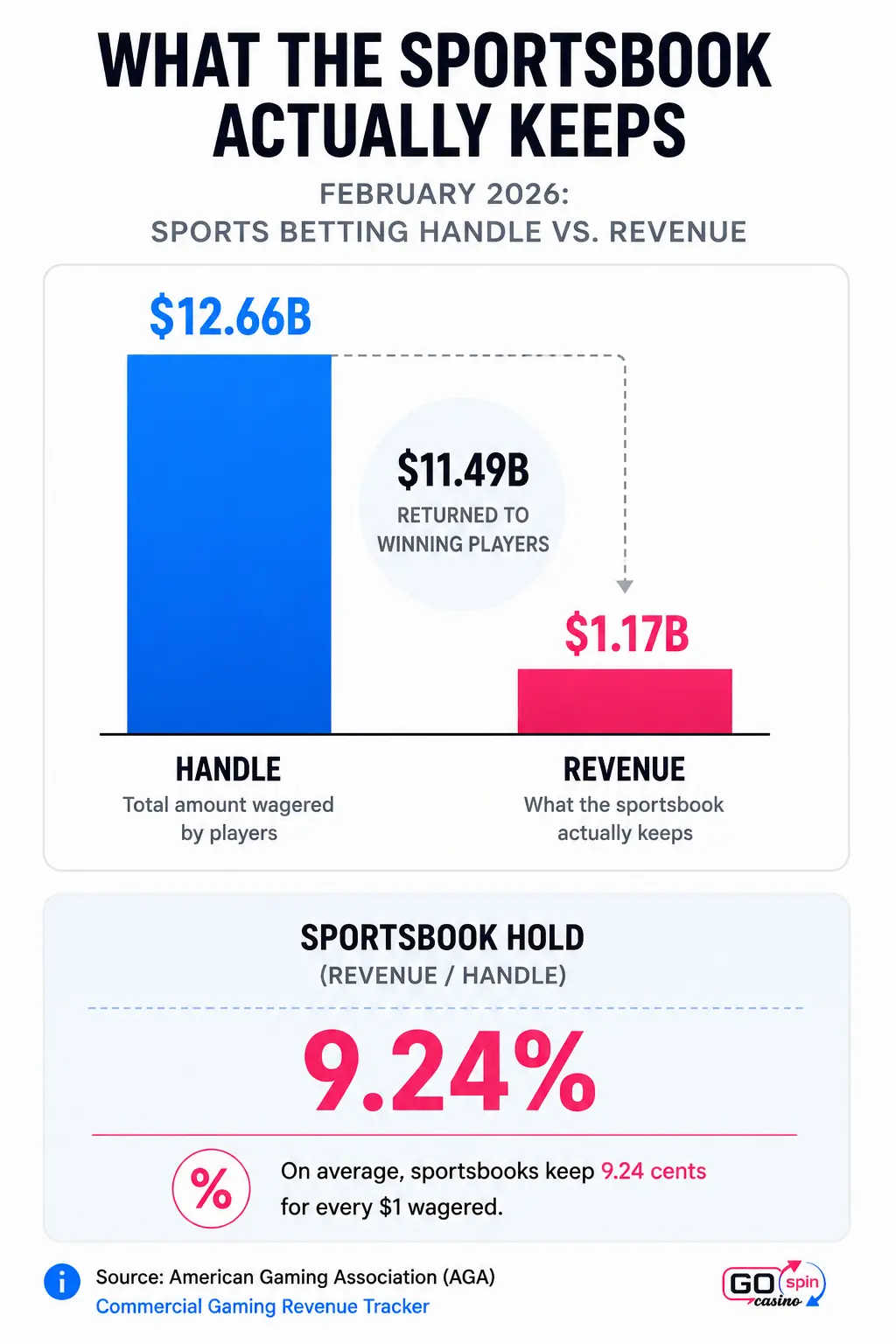
Şubat 2026’da, ABD’deki spor bahis gelirleri toplamda $1,17 milyar bir sapından $12.66 billion. The hold was 9.24%, which shows the gap between money wagered and money retained.
For casino operators, sports betting often works best as a cross-sell channel. A player may arrive for NFL betting, then move into slots, live blackjack, roulette or VIP casino campaigns.
That cross-sell is where the economics become more interesting than the bet slip.
Çevrimiçi Kumarhane Oyunları
Online casino revenue is built on scale, data and retention.
A land-based casino is limited by floor space, machines, tables and staffing. An online casino can serve players across multiple GEOs at the same time, depending on regulation and licensing.
The cost structure changes too.
Online casinos pay for platforms, game aggregation, provider fees, payment processing, fraud tools, KYC checks, affiliate commissions and bonus campaigns. If a player deposits once and never returns, the acquisition cost can destroy the margin.
That is why FTDs, LTV, CRM and retention are not just marketing terms. They decide whether growth is profitable or just expensive.
Understanding how casinos make money starts with understanding the games. Try any slot or table game for free before playing with real money.
Vegas Casino ve Çevrimiçi Kumarhane Karşılaştırması
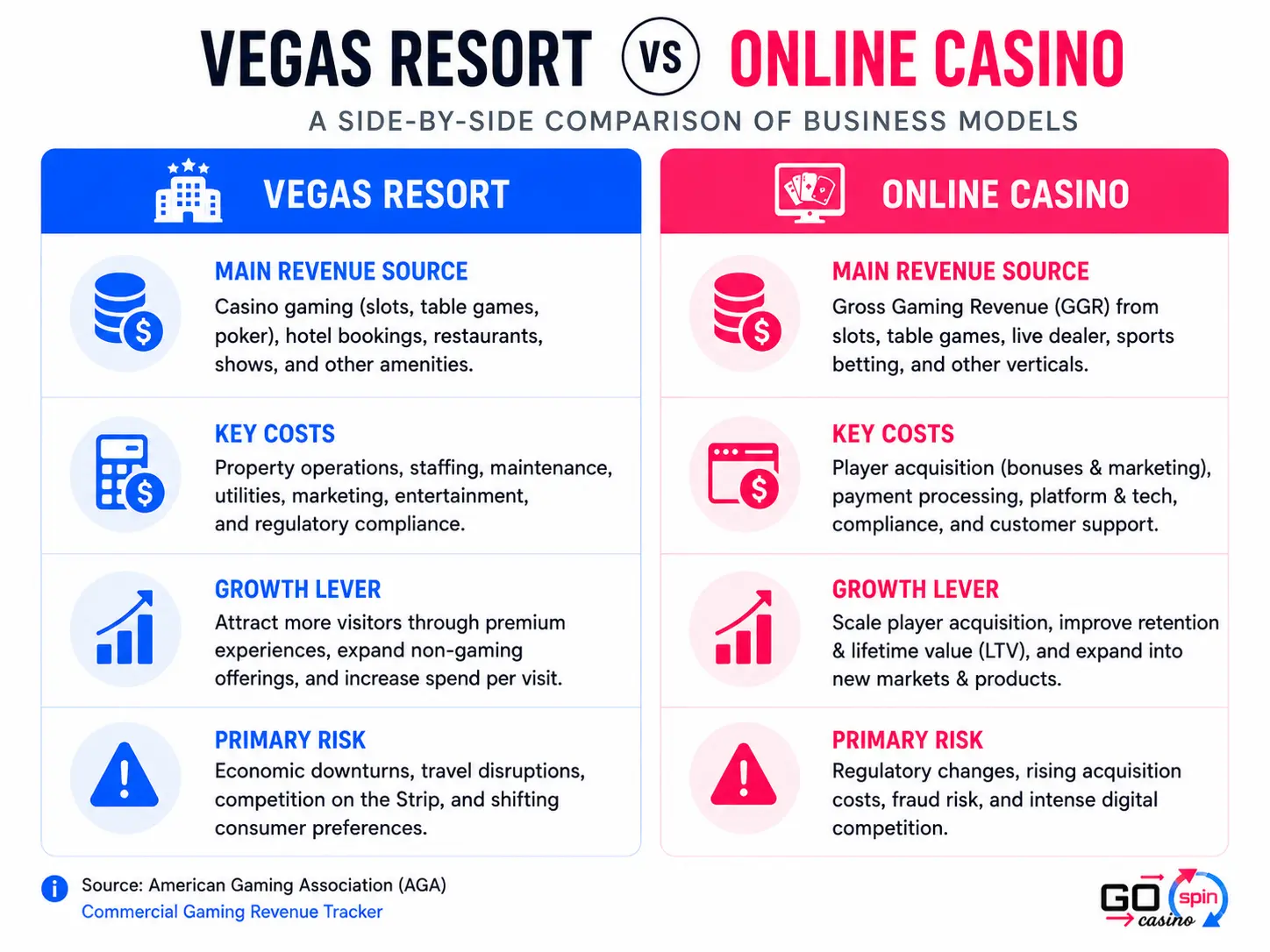
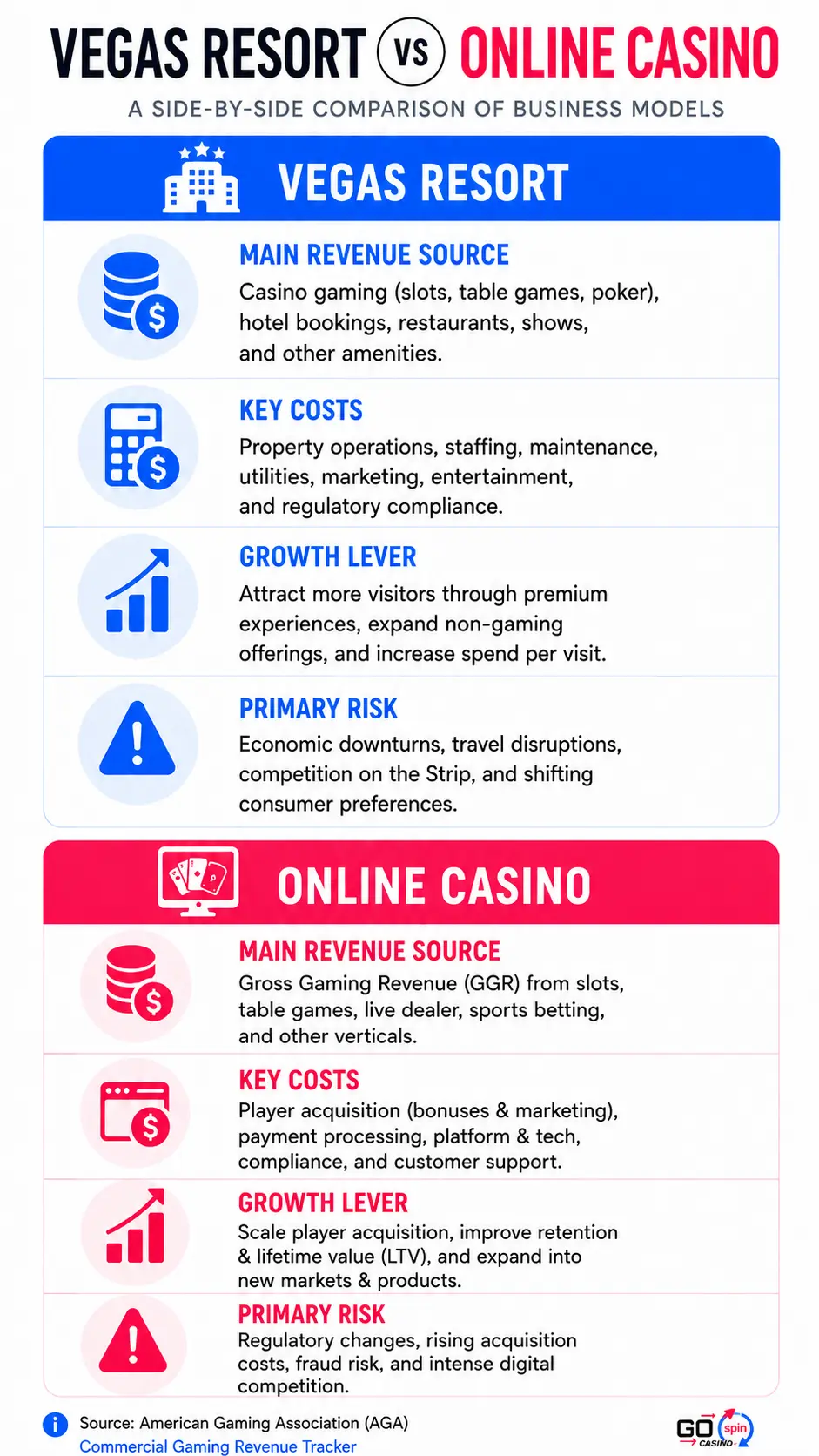
A Las Vegas resort and an online casino may both offer slots and blackjack, but the business model is different.
A Vegas casino resort earns from gaming and hospitality. A large property can generate revenue from slots, tables, high-limit rooms, hotel rooms, restaurants, bars, shows, events, conventions, resort fees, retail, VIP packages and loyalty programs.
An online casino earns from product and repeat engagement. Its revenue usually comes from slots, live dealer games, RNG table games, instant win titles, jackpots, sportsbook cross-sell, VIP campaigns, reload offers and CRM.
Bir kumarhane günde ne kadar kâr ediyor?
There is no universal daily profit figure because two casinos can generate similar revenue and finish with very different margins.
A land-based casino might post strong gaming revenue but carry heavy fixed costs: payroll, utilities, property maintenance, surveillance, compliance, hotel staffing, food and beverage operations and comps.
An online casino avoids resort costs, but it can spend heavily on traffic and retention. Affiliate CPA, rev share, payment fees, game-provider fees, platform costs, KYC, fraud management and bonus spend all matter.
The main profit drivers are location, tax rate, game mix, player quality, marketing cost, bonus discipline, operating cost and VIP exposure.
Buying FTDs is easy. Buying profitable FTDs is the harder part.
Oyunlara Göre Kumarhane Gelirleri: Hangi Oyunlar En Fazla Gelir Getiriyor?
Casino revenue by game changes by market, but the broad pattern is clear: slots usually drive the most consistent gaming revenue, table games add engagement and VIP upside, sports betting brings volume and cross-sell, and online casino products scale through repeat play.
Yuvalar
Slots are the workhorse.
They are fast, simple, scalable and available in almost every theme imaginable. Online, they become even more powerful because a casino can offer thousands of titles without physical floor space limits.
For players, the key numbers are RTP, volatility and bonus mechanics. For casinos, the key numbers are volume, retention, provider fees and player value.
Blackjack
Blackjack is valuable because it keeps players engaged.
It has rhythm, decision-making and a stronger skill component than most casino games. Strong strategy can reduce the house edge, which is good for informed players but creates more operator variability than a standard slot product.
Roulette
Roulette works because it is simple, visual and easy to understand.
The house edge is clear, especially on American roulette with the double zero. It attracts casual players and gives operators a smooth, easy-to-follow table product.
Baccarat
Baccarat is a high-limit revenue swing game.
It is simple to play, but the money can be serious. In major resort markets, VIP baccarat can move table game numbers quickly, both positively and negatively.
Canlı Krupiye Oyunları
Live dealer games are one of online casino’s strongest retention tools.
Live blackjack, roulette, baccarat and game-show formats bring real presenters, streamed tables and social rhythm into the online lobby. They cost more to run than RNG games, but they can keep players engaged for longer sessions.
Bir kumarhane sahibi olmak ne kadar kazandırır?
Owning a casino can be profitable, but owner earnings are not the same as casino revenue.
A casino owner, shareholder or operating company does not simply take daily GGR home. The business may have debt, investors, lease agreements, management fees, tax obligations, compliance costs and reinvestment plans.
A small private operator may take distributions from profit. A public casino company may return value through earnings, dividends, share performance or executive compensation. Tribal gaming follows its own governance and community distribution models. Online casinos may involve license holders, platform providers, white-label structures, affiliates and joint ventures.
Owner earnings depend on ownership percentage, financing costs, tax structure, market size, management agreements, operating efficiency, brand strength and player retention.
Oyuncular Kazansa Bile Kumarhaneler Neden Para Kazanmaya Devam Ediyor?
Players win individual sessions all the time. The casino model does not require every spin, hand or match result to favor the house.
The model depends on volume, margin and time.
A slot with 96% RTP can still pay a large win today. A blackjack table can have a bad night for the house. A sportsbook can lose money during a favorite-heavy weekend.
Over a large enough sample, the operator is relying on the game math, pricing, risk controls and repeat play. That is why retention matters. The edge only becomes meaningful when players return, deposit, wager and engage over time.
Loyalty programs, reload bonuses, VIP hosts, cashback and free spins are part of that system. They are retention mechanics, not random generosity.
Oyuncular, Kumarhane Kâr Modelinden Neler Öğrenebilir?
Understanding how casinos make money does not mean you can beat the system. It means you can read the experience with sharper expectations.
Slot oyunları, geleneksel kumar gelirlerinin büyük bir kısmını oluşturur; bu nedenle RTP ve oynaklığı iyi anlamanız gerekir
In February 2026, U.S. commercial slots generated $2,95 milyar, compared with $805,7 milyon from table games. That does not mean slots are bad for players, but it does show why they are so central to casino economics. Players who want more control over session rhythm should pay attention to RTP, volatility and bet sizing.
Bahis hacmi, bahis geliriyle aynı şey değildir
The February 2026 sports betting data shows $12.66 billion in handle and $1,17 milyar in revenue. That difference matters because betting volume and operator earnings are not the same thing. Players should think the same way about their own betting: volume is not profit.
Bonuslar satın alma maliyetleridir; bu nedenle, bir tüccarın riski değerlendirir gibi şartları dikkatle inceleyin
A big match bonus is part of the operator’s retention model. The value depends on wagering requirements, game contribution, max bet rules, expiry dates and withdrawal caps. Before claiming a promo, use the Go Spin Casino bonus calculator to check whether the offer is actually worth your bankroll.
Çevrimiçi kumarhaneler hızla büyüyor, ancak oyuncu değeri hâlâ tekrar yapılan para yatırma işlemlerinden kaynaklanıyor
The U.S. iGaming market generated $10.73 billion in 2025 across only seven lawful online casino states. That shows how powerful online casino scale can be, but also why operators focus so hard on CRM, payment flow and retention.
Kumarhane modelini oyuncu açısından görmek ister misiniz?
Once you understand how casinos make money, the player experience reads differently.
A bonus is not just a headline amount. RTP is not just a number hidden in the game info screen. Fast payouts, fair wagering rules, transparent terms and a strong game library all matter.
Go Spin Casino'leri kullanın çevrimiçi kumarhane incelemeleri to compare bonuses, payment options, payout rules, game libraries and player value before signing up.
Play smarter, compare the details, and treat the casino for what it is: entertainment with math underneath.
18+ | Sorumlu Oynayın.
Kumarhanelerin Ne Kadar Kazandığına Dair Sık Sorulan Sorular
Bir kumarhane, büyüklüğüne, konumuna ve iş modeline bağlı olarak günde binlerce ila milyonlarca arasında gelir elde edebilir. ABD ticari pazar düzeyinde, kumar gelirleri ortalama olarak yaklaşık $215,4 milyon günlük 2025 yılında; ancak bu rakam, tek bir kumarhaneyi değil, ulusal düzeyde denetime tabi ticari pazarı kapsamaktadır.
Evet, pek çok kumarhane kâr elde ediyor, ancak bu kâr, toplam gelirden daha düşük. Kumarhaneler, kâr elde edebilmek için önce kazanç ödemelerini, vergileri, personel giderlerini, lisans maliyetlerini, yazılım sağlayıcılarına yapılan ödemeleri, ödeme ücretlerini, pazarlama giderlerini, ortaklık komisyonlarını ve oyuncu promosyonlarını karşılamak zorundadır.
Kumarhane sahiplerinin kazançları büyük farklılıklar gösterir; zira işletme gelirleri, işletmenin yapısı, borç durumu, vergiler, pazar büyüklüğü, işletme maliyetleri ve yeniden yatırımlara bağlıdır. Bir kumarhane büyük bir gelir elde etse de, sahibinin eline geçen gerçek kâr çok daha az olabilir.
Küçük bir kumarhane günde binlerce kazanabilirken, büyük bir tatil köyü veya önde gelen bir çevrimiçi kumarhane çok daha fazla gelir elde edebilir. En büyük fark, ziyaretçi sayısı, oyun yelpazesi, ortalama oyuncu değeri, vergi oranı ve kumarhanenin otel, yemek, eğlence veya çevrimiçi tekrar para yatırma işlemlerinden de gelir elde edip etmediğine bağlıdır.
Birçok fiziksel kumarhane için slot makineleri, en büyük oyun gelir kaynağıdır. Şubat 2026’da, ABD’deki ticari slot makineleri $2,95 milyar, masa oyunlarının çok üzerinde, $805,7 milyon aynı dönem için. Tatil köyü kumarhaneleri ayrıca otel odaları, restoranlar, eğlence ve etkinliklerden de önemli gelirler elde edebilir.
Veri Kaynakları
The market revenue figures and gaming category breakdowns used in this article are based on publicly available data from the American Gaming Association (AGA).
Amerikan Kumar Derneği, Eyaletlerin Durumu 2026
www.americangaming.org/resources/state-of-the-states-2026/
Used for 2025 U.S. commercial gaming revenue, traditional casino gaming revenue, sports betting revenue, iGaming revenue, gaming tax revenue, number of commercial casino locations and U.S. market context.
Amerikan Kumar Derneği, Ticari Kumar Gelirleri İzleme Sistemi
www.americangaming.org/resources/commercial-gaming-revenue-tracker/
Used for February 2026 monthly figures, including slot machine revenue, table game revenue, sports betting revenue, sports betting handle, hold percentage and iGaming revenue.