
Os casinos de criptomoedas não são automaticamente legais nos EUA. O Bitcoin pode alterar a forma como um jogador efetua depósitos, mas não altera a legislação estadual relativa ao jogo, o licenciamento dos casinos, as regras de KYC nem as jurisdições restritas. Um casino de criptomoedas pode aceitar BTC e, mesmo assim, não estar autorizado a prestar serviços no estado de um jogador dos EUA; por isso, a licença e os termos são mais importantes do que a moeda.
Sempre que um casino de criptomoedas se torna popular, surge a mesma questão: se as criptomoedas substituírem um cartão bancário, isso evita o problema jurídico?
A resposta sincera é não. As criptomoedas alteram o método de pagamento. Não alteram a legislação dos EUA em matéria de jogos de azar.
É por isso que a questão de saber se um casino de criptomoedas é legal nos mercados dos EUA requer mais do que um simples «sim» ou «não». A resposta correta depende do estado em que o jogador se encontra, da licença do casino, das jurisdições restritas indicadas nos termos e condições e do facto de o operador estar efetivamente autorizado a aceitar esse jogador.
Na prática, o método de pagamento é apenas uma parte do quadro geral. As questões mais importantes são a localização do jogador, o que o casino está autorizado a oferecer e o que os termos e condições dizem sobre o tráfego proveniente dos EUA.
Índice
- Um casino de criptomoedas é legal nos EUA?
- Pontos-chave para os jogadores de casinos de criptomoedas nos EUA
- Por que razão a regra Bitcoin não constitui uma lacuna legal no âmbito do jogo
- Como a legislação dos EUA aborda os jogos de azar com criptomoedas online
- Regulamentação por Estado: Por que razão a localização é importante
- Casinos online licenciados nos EUA vs. casinos offshore de criptomoedas
- Os jogadores dos EUA podem utilizar casinos offshore que aceitam criptomoedas?
- Casinos de criptomoedas sem KYC, VPNs e risco de levantamento
- O que a Go Spin Casino verifica antes de confiar num casino de criptomoedas
- Quando o fascínio pelas slot machines se torna arriscado
- Riscos adicionais que os jogadores de casinos de criptomoedas devem compreender
- Mitos comuns sobre a legalidade dos casinos de criptomoedas
- Mito 1: Se aceitar Bitcoin, é legal.
- Mito 2: Se o registo for bem-sucedido, o jogador pode jogar.
- Mito 3: «No-KYC» significa que não há regras.
- Mito 4: Uma VPN torna os jogos de azar com criptomoedas legais.
- Mito n.º 5: Uma licença offshore significa que foi aprovada pelos EUA.
- Mito n.º 6: Os ganhos com criptomoedas são invisíveis.
- Mito 7: Um bónus de criptomoedas maior significa um casino melhor.
- Veredicto final: a licença é mais importante do que a moeda
- Perguntas frequentes: Questões legais sobre os casinos de criptomoedas nos EUA
Um casino de criptomoedas é legal nos EUA?
Os casinos de criptomoedas não são automaticamente legais nos EUA. A possibilidade de um jogador utilizar legalmente um destes casinos depende das leis estaduais relativas ao jogo, da licença do casino, da política do operador relativamente a países restritos e, acima de tudo, do facto de a plataforma estar ou não autorizada a aceitar clientes dos EUA.
O Bitcoin não cria uma lacuna jurídica. Trata-se apenas de um método de pagamento. O facto de um casino permitir que alguém se registe não é o mesmo que um organismo regulador autorizar esse casino a operar no estado desse jogador.
A lição prática a reter é simples: verifique a licença e as jurisdições sujeitas a restrições antes de consultar a lista de moedas.
Pontos-chave para os jogadores de casinos de criptomoedas nos EUA
- As criptomoedas não tornam automaticamente legal o jogo online nos EUA.
- A legalidade dos jogos de azar com BTC depende da legislação estadual, do licenciamento e dos termos do casino, e não apenas da moeda utilizada.
- Os casinos offshore podem aceitar tráfego proveniente dos EUA, mas o facto de permitirem o acesso não significa que tenham a aprovação dos EUA.
- Os casinos sem KYC podem, ainda assim, solicitar uma verificação antes dos levantamentos, especialmente no caso de montantes elevados.
- A utilização de uma VPN pode violar os termos e condições do casino e colocar em risco os fundos depositados ou os ganhos.
- As apostas desportivas online, os jogos de casino, o póquer e os produtos do tipo sorteios podem ser tratados de forma diferente pela legislação estadual.
- A licença é mais importante do que a moeda.
Por que razão a regra Bitcoin não constitui uma lacuna legal no âmbito do jogo
Muitos jogadores partem do princípio de que passar de um cartão de débito para o Bitcoin resolve a questão jurídica. Mas não é assim, porque Legalidade dos jogos de azar com BTC Começa com o jogo, não com o BTC.
O Bitcoin é um canal de pagamentos. Permite transferir valores de uma carteira para outra sem passar por um banco tradicional, e é precisamente por isso que resulta apelativo para os intervenientes em mercados onde os pagamentos com cartão a sites de jogos de azar podem ser bloqueados. No entanto, eliminar um obstáculo bancário não é o mesmo que eliminar um obstáculo legal.
A legalidade do jogo online depende da atividade em questão e da jurisdição. Um casino que aceite Bitcoin, Ethereum, Litecoin ou USDT adicionou uma opção de pagamento. No entanto, isso não lhe confere automaticamente o direito de prestar serviços a jogadores em todos os estados dos EUA.
Essa distinção é importante. Um casino de criptomoedas pode anunciar levantamentos rápidos, registo sem KYC, bónus elevados e depósitos instantâneos na carteira. Nada disso responde à questão jurídica. As primeiras verificações devem ser sempre a licença, as jurisdições restritas, as regras de KYC, os termos de levantamento e a política relativa à VPN.
A alteração do método de depósito não altera o estatuto jurídico do casino nem as regras estatais aplicáveis ao jogador.
Como a legislação dos EUA aborda os jogos de azar com criptomoedas online
A legislação dos EUA em matéria de jogos de azar online é fragmentada. Não existe uma única norma federal que determine se todos os casinos online são legais ou ilegais em todo o país. Os jogos de azar são regulamentados principalmente a nível estadual, embora as leis federais possam afetar o processamento de pagamentos, os jogos de azar interestaduais, a aplicação da lei e a conduta dos operadores.
A Lei de Combate ao Jogo Ilegal na Internet (Unlawful Internet Gambling Enforcement Act), normalmente abreviada como UIGEA, é frequentemente mal interpretada nas discussões sobre jogos de azar com criptomoedas. Não se trata de uma simples proibição a nível nacional de todas as formas de jogo online. Centra-se principalmente nos pagamentos restritos relacionados com jogos de azar ilegais na Internet. Isso significa que a atividade de jogo subjacente continua a ser relevante. Se a atividade de jogo for ilegal ao abrigo da legislação aplicável, o método de pagamento utilizado para a financiar pode tornar-se parte do problema de conformidade.
As criptomoedas não resolvem essa questão. Podem evitar o recurso a um processador de cartões ou a uma transferência bancária, mas não alteram o facto de a atividade de casino ser ou não permitida no local onde o jogador se encontra.
Há ainda outro aspeto a considerar: os diferentes setores do jogo podem ser tratados de forma distinta. Um estado pode permitir as apostas desportivas online, mas não jogos de casino online. Outra pode regulamentar o póquer online separadamente. Os produtos de casino do tipo «sorteio» também podem enquadrar-se numa categoria jurídica diferente das slot machines ou do blackjack a dinheiro real.
É por isso que afirmações genéricas como “os jogos de casino online são legais nos EUA” ou “os jogos de casino online são ilegais nos EUA” são, ambas, demasiado simplistas. A melhor pergunta é:
Que estado, que operador, que produto e que licença?
Regulamentação por Estado: Por que razão a localização é importante
A legislação estadual é que, normalmente, determina se os jogos de casino online são ou não permitidos. É por isso que dois jogadores em estados diferentes podem fazer exatamente a mesma pergunta sobre o mesmo casino de criptomoedas e enfrentar riscos práticos diferentes.
Alguns estados regulamentam e licenciam os mercados de casinos online. Outros permitem as apostas desportivas online, mas não autorizam a prática completa de jogos de casino online. Alguns continuam a adotar uma postura restritiva em relação ao jogo online em geral. Mesmo nos estados onde os casinos online são legais, isso não significa que os casinos offshore que utilizam criptomoedas sejam automaticamente autorizados.
Em junho de 2026, os mercados regulamentados de casinos online são geralmente associados a estados como Connecticut, Delaware, Michigan, Nova Jérsia, Pensilvânia, Rhode Island, Virgínia Ocidental e Maine. A disponibilidade, o estado de lançamento, os operadores elegíveis e o âmbito dos produtos devem ser sempre verificados antes da publicação ou antes de qualquer jogador efetuar um depósito.
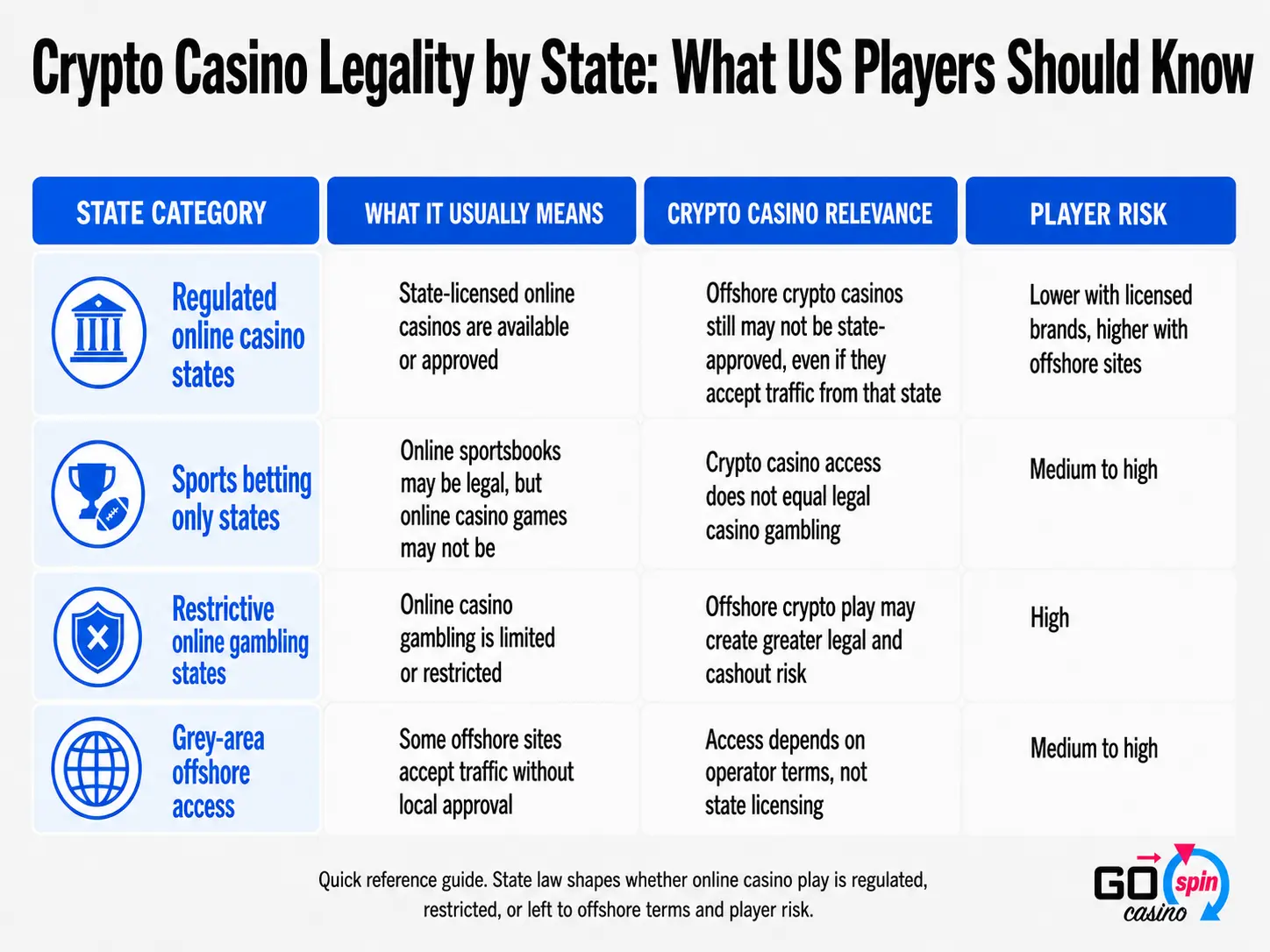
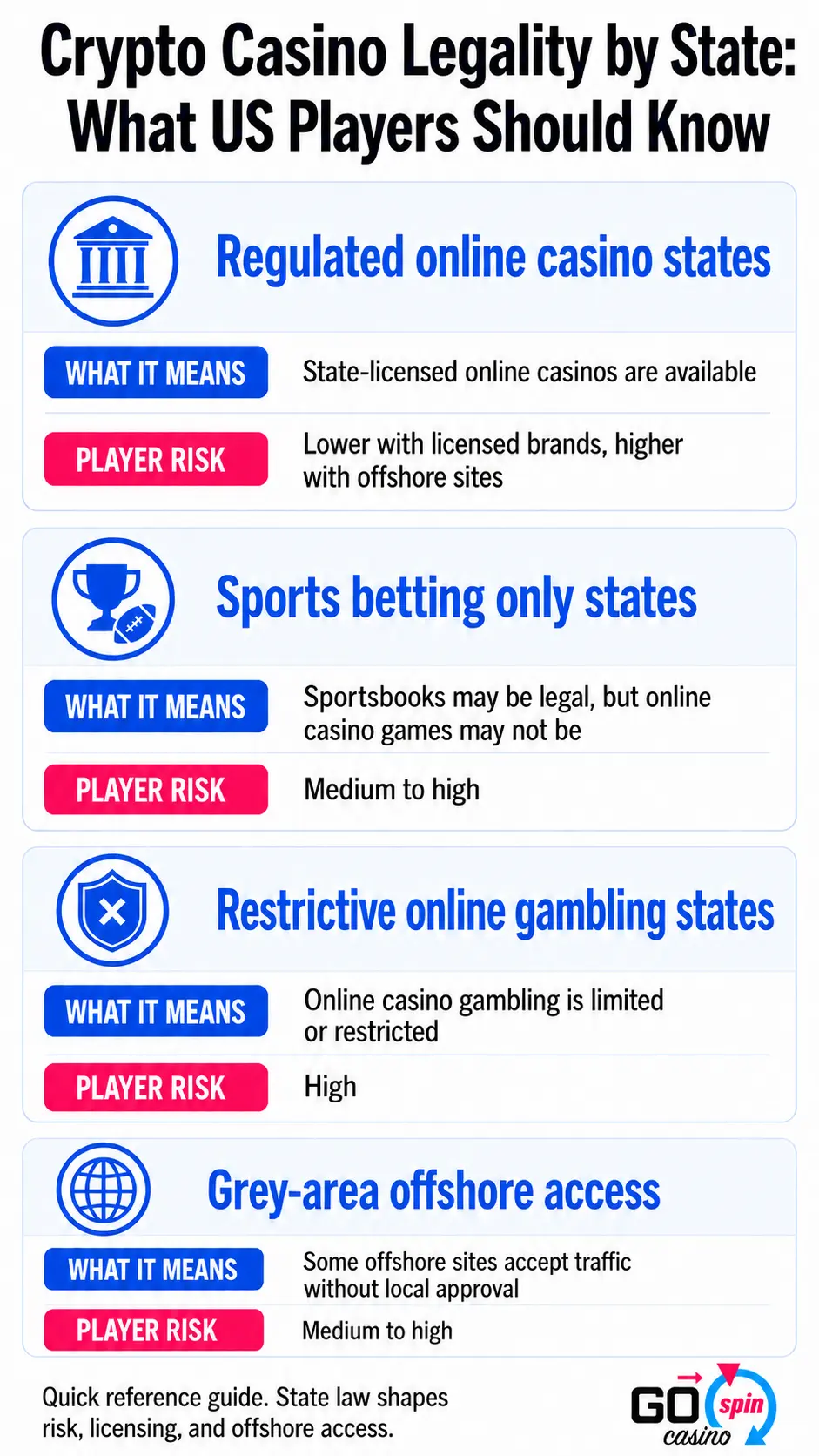
Esta tabela constitui um quadro geral de conteúdo e não constitui aconselhamento jurídico. A regulamentação relativa aos jogos de azar nos EUA varia de estado para estado e pode sofrer alterações ao longo do tempo. Os jogadores devem verificar as regras locais em vigor e as jurisdições restritas pelo casino antes de efetuarem um depósito.
Casinos online licenciados nos EUA vs. casinos offshore de criptomoedas
Esta é a comparação que muitas páginas sobre os “melhores casinos Bitcoin” ignoram, apesar de ser um dos aspetos mais importantes do tema.
Casinos online dos EUA com licença operam com autorização do estado. Normalmente, exigem verificações de geolocalização para confirmar que o jogador se encontra fisicamente num estado elegível, identificação obrigatória do cliente (KYC), ferramentas de jogo responsável, sistemas de pagamento regulamentados e acesso à proteção do consumidor local, caso algo corra mal.
A contrapartida é que a maioria dos casinos online norte-americanos regulados pelo Estado dão prioridade às moedas fiduciárias. Podem não aceitar depósitos diretos em BTC, ETH ou USDT. Esta é uma das razões pelas quais alguns jogadores interessados em criptomoedas procuram opções no estrangeiro: a opção regulada pode oferecer uma maior proteção ao consumidor, mas pode não proporcionar a experiência direta com criptomoedas que o jogador deseja.
Casinos de criptomoedas offshore funcionam de forma diferente. Muitas aceitam BTC, ETH, USDT, LTC e outras moedas digitais. Algumas anunciam um processo de registo sem KYC ou com KYC simplificado. Outras aceitam tráfego dos EUA, quer de forma geral, quer proveniente de determinados estados. No entanto, muitas não possuem uma licença estadual dos EUA, podem oferecer uma proteção ao consumidor mais fraca e podem restringir o acesso de determinados estados dos EUA em algum ponto dos seus termos e condições.
Esse último ponto é importante. O facto de um site ser acessível a partir dos EUA não significa que esteja licenciado nos EUA. Um casino que aceite depósitos em BTC não constitui prova de que o operador esteja legalmente autorizado a prestar serviços na localização desse jogador.
Quem comparar casinos licenciados nos EUA com casinos de criptomoedas offshore deve considerar essa diferença como o fator decisivo, e não o valor do bónus.
Os jogadores dos EUA podem utilizar casinos offshore que aceitam criptomoedas?
Alguns casinos de criptomoedas offshore aceitam jogadores dos EUA e, tecnicamente, alguns jogadores podem registar-se, efetuar depósitos e jogar sem dificuldades imediatas. Isso não deve ser interpretado como aprovação legal, proteção do jogador ou uma recomendação para se inscrever.
Esta é a diferença entre poder aceder a um site e o operador estar autorizado a prestar serviços a esse jogador. O facto de um site de casino não bloquear um endereço IP não constitui um parecer jurídico. Trata-se, normalmente, de uma decisão de natureza comercial, técnica ou de conformidade.
As listas de países e estados restritos, que se encontram escondidas nos termos e condições, são relevantes neste contexto. Estas listas descrevem os locais onde o operador afirma poder ou não aceitar jogadores, mesmo que a página de registo pareça funcionar.
Um exemplo realista torna o risco mais claro. Um jogador num estado onde os casinos online não são regulamentados inscreve-se num casino offshore que aceita BTC. O site aceita o depósito e permite que o jogador jogue. Mais tarde, o jogador ganha e solicita um levantamento. O casino pede a verificação de identidade (KYC), verifica a localização do jogador e constata que os termos excluem esse estado. Nessa altura, a questão já não é saber se a transação Bitcoin funcionou. Trata-se de saber se a conta deveria ter sido aceite desde o início.
Os riscos práticos incluem:
- Revisão ou encerramento da conta;
- Atrasos nos levantamentos;
- Recusa de levantamentos se o jogador se encontrar numa jurisdição sujeita a restrições;
- Confiscação do bónus em caso de incumprimento dos termos;
- Não existe uma entidade reguladora local a quem recorrer em caso de litígio;
- Apoio ao jogo responsável insuficiente ou pouco claro.
Nada disto significa que todos os casinos de criptomoedas offshore sejam inseguros. Significa que é necessário realizar uma verificação cuidadosa antes do depósito, e não depois de o levantamento ter sido atrasado.
Casinos de criptomoedas sem KYC, VPNs e risco de levantamento
Os casinos sem KYC atraem jogadores preocupados com a privacidade por razões óbvias: um registo mais rápido, menos pedidos de documentos e uma sensação de maior anonimato no primeiro depósito.
No entanto, “sem KYC” significa frequentemente que não é necessário o KYC no momento do registo, e não que não seja necessário para sempre. Muitos casinos reservam-se o direito de solicitar a verificação de identidade antes de levantamentos, pagamentos de montantes elevados, análises de atividades suspeitas, verificações de contas duplicadas, análises de pagamentos ou verificações de combate ao branqueamento de capitais.
«No-KYC» não significa que não haja regras. O verdadeiro teste a um casino «no-KYC» não é a rapidez com que permite a entrada de um jogador, mas sim o que acontece quando o jogador tenta levantar dinheiro.
As VPNs acrescentam mais um risco. Uma VPN não torna o jogo online legal, nem altera a legislação aplicável à localização real do jogador. Pode também violar os próprios termos de serviço do casino.
Os operadores que detetem o uso de VPN, proxy ou ferramentas de ocultação de localização podem considerar isso uma violação dos termos e condições. Tal pode levar a revisões da conta, atrasos nos levantamentos ou à confiscação de ganhos, mesmo antes de se analisar a questão jurídica mais ampla.
A posição editorial mais segura é clara: as VPN não devem ser consideradas uma solução alternativa para contornar as restrições dos casinos. Se um casino bloquear uma localização ou a classificar como restrita, essa restrição deve ser levada a sério.
O que a Go Spin Casino verifica antes de confiar num casino de criptomoedas
As melhores análises de casinos de criptomoedas não começam pelo bónus de boas-vindas. Começam pelos termos que determinam se um jogador pode, de facto, levantar os seus ganhos.
No Go Spin Casino, o risco dos casinos de criptomoedas é analisado numa perspetiva prática que coloca o jogador em primeiro lugar. O valor dos bónus, a seleção de moedas e a rapidez dos depósitos são importantes, mas só o são depois de concluídas as verificações de segurança essenciais.
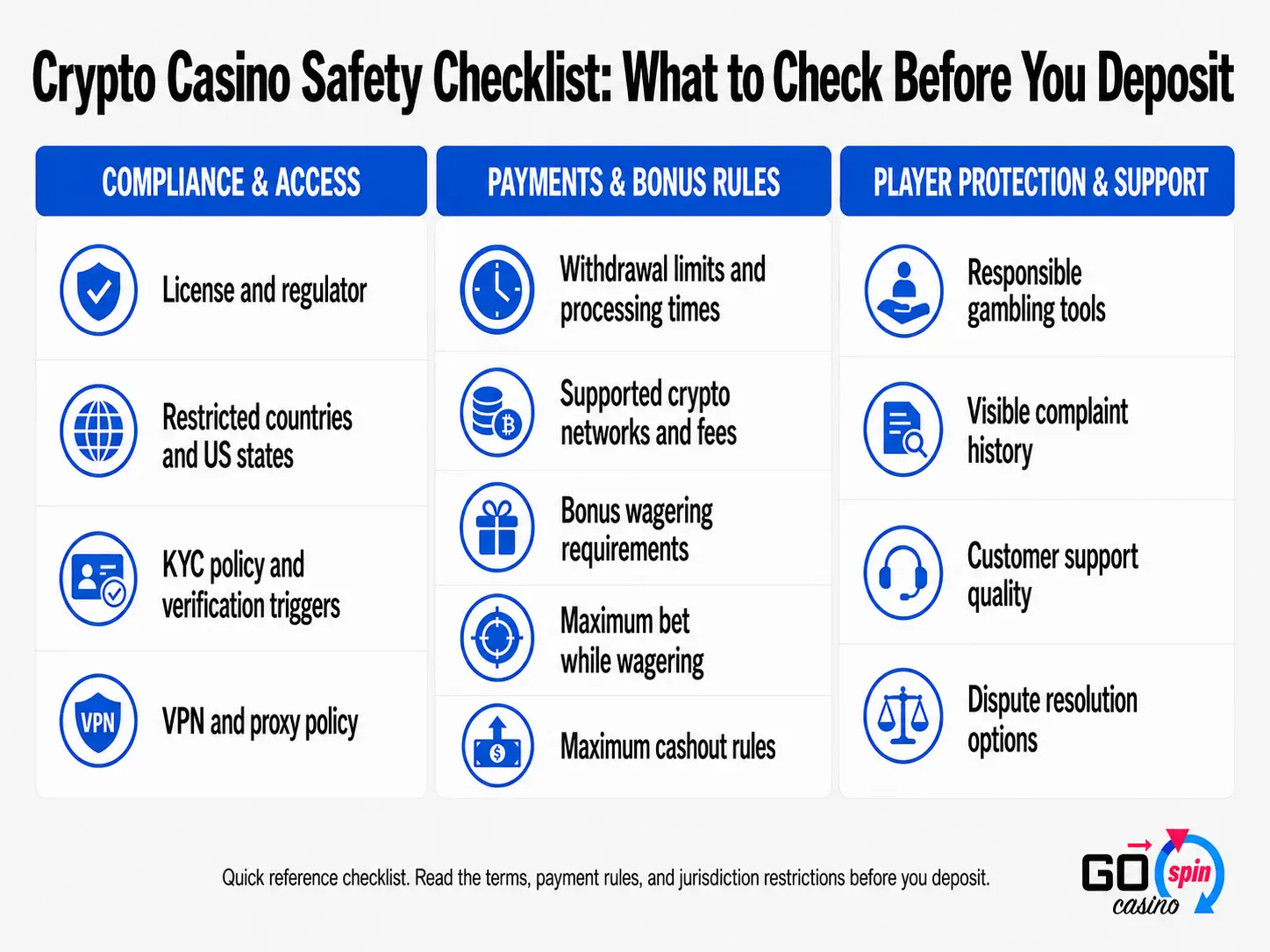
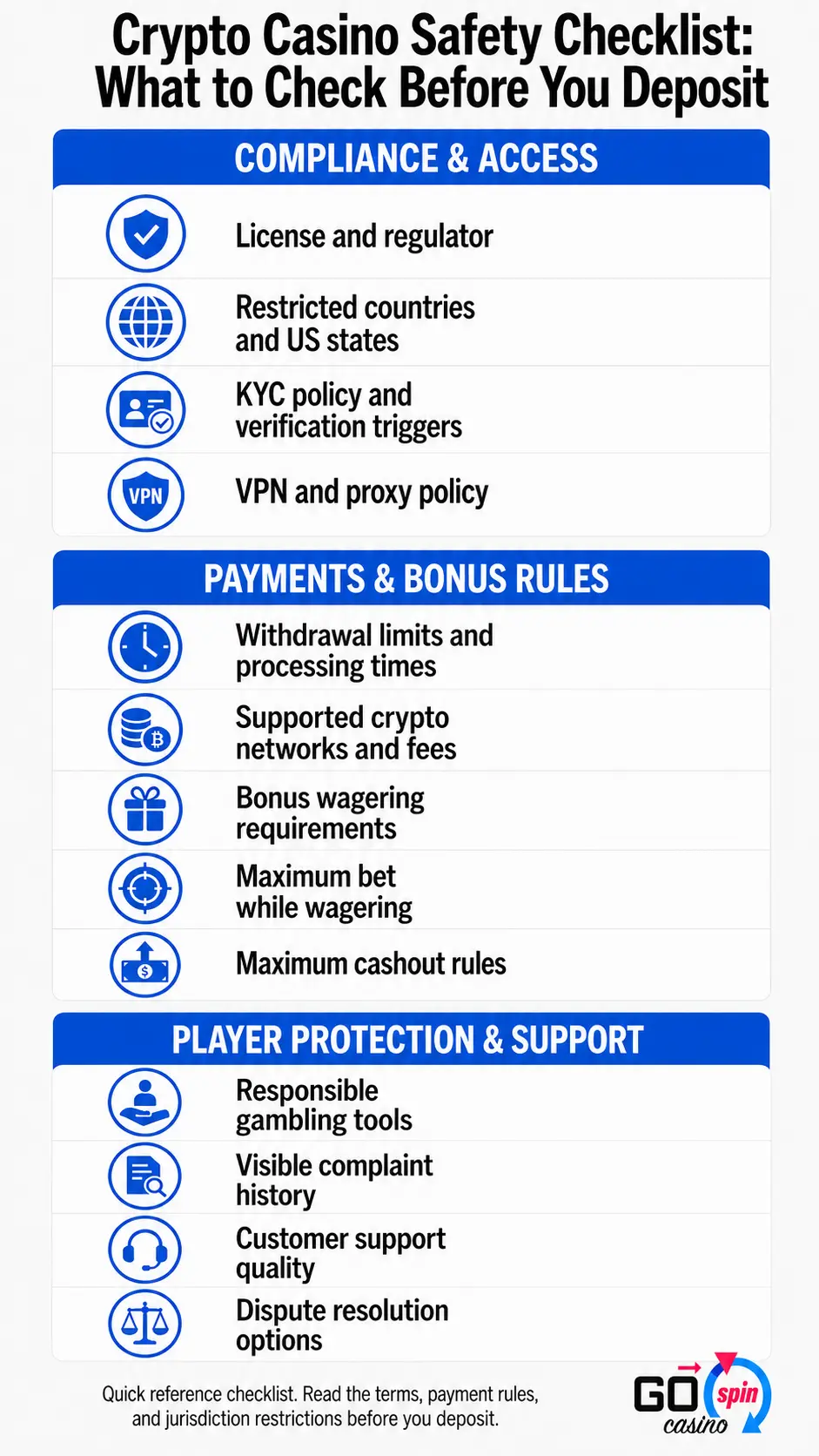
As jurisdições restritas e os fatores desencadeantes do KYC merecem especial atenção. Estes revelam se uma conta poderá vir a ser congelada mais tarde, mesmo que tudo pareça estar em ordem no primeiro dia.
Os limites de levantamento e os limites máximos de levantamento também são importantes, porque mostram quanto vale realmente um grande prémio na prática, e não apenas no ecrã do saldo. Um bónus elevado pode perder grande parte do seu valor se as regras de aposta forem rigorosas, se a aposta máxima for baixa ou se o limite de levantamento for restritivo.
O histórico de reclamações é outro indicador útil. Os fóruns independentes dedicados a reclamações sobre casinos podem revelar como um operador se comporta quando surge um litígio relativo a um pagamento. Esse momento diz, muitas vezes, mais sobre um casino do que a sua página inicial alguma vez dirá.
Também vale a pena consultar as páginas com os termos exatos, e não apenas o texto de marketing. Procure:
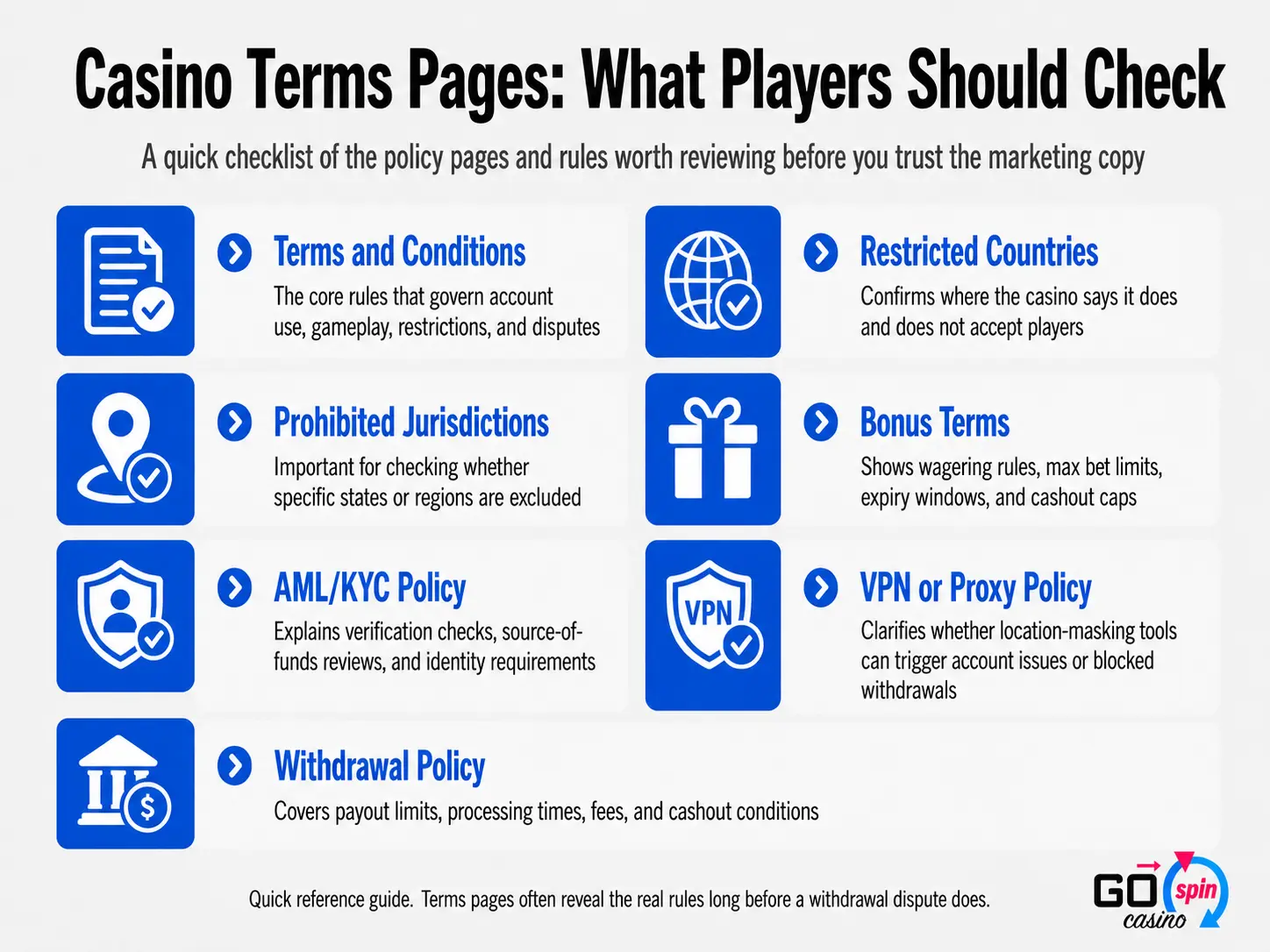
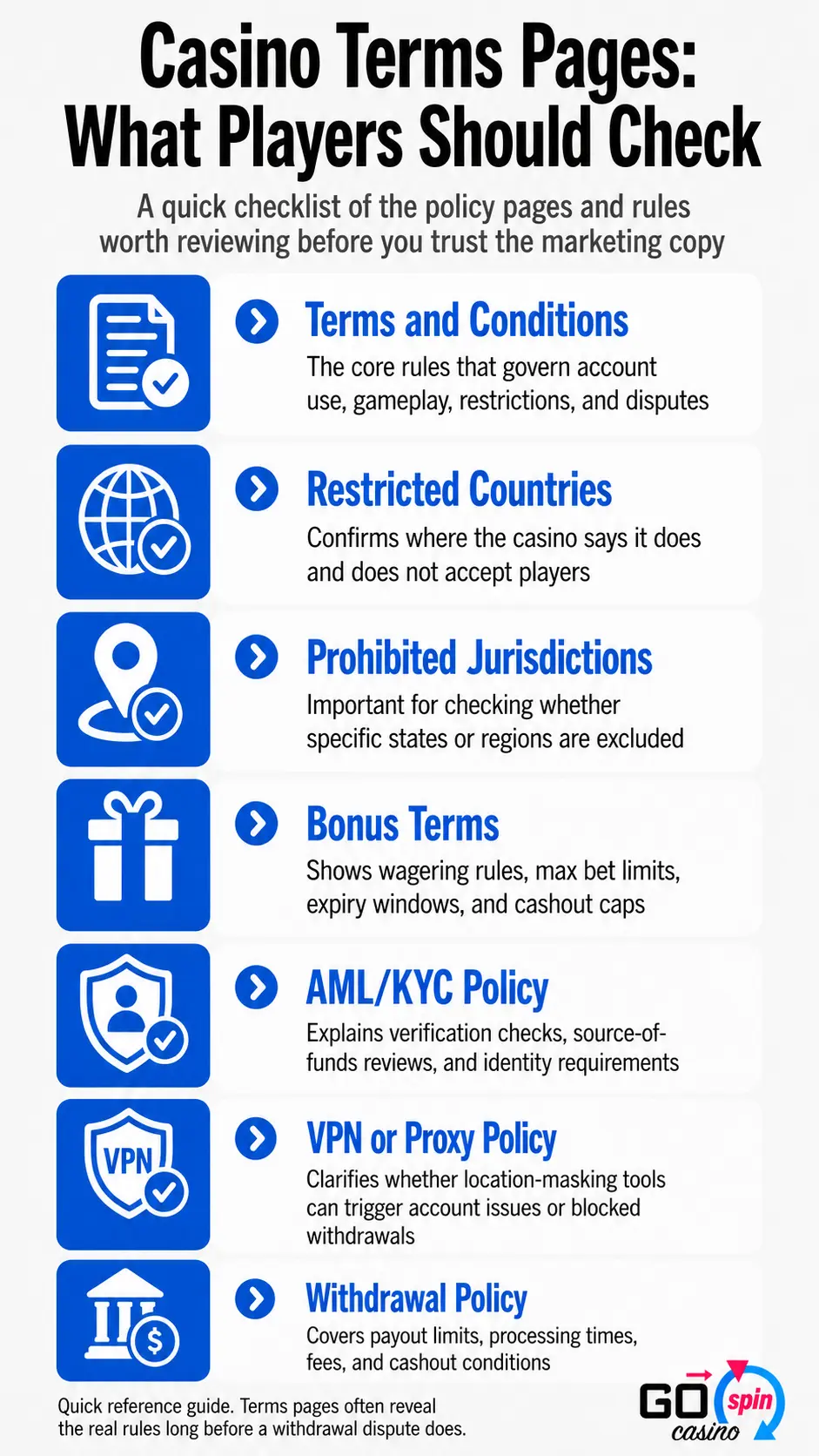
Se o rodapé, a página dos termos e condições ou o processo de registo indicarem que os jogadores dos EUA ou de determinados estados dos EUA estão sujeitos a restrições, isso deve prevalecer sobre qualquer título que afirme que o casino está “disponível em todo o mundo”.”
Quando o fascínio pelas slot machines se torna arriscado
O Go Spin Casino separa o acesso da aprovação.
O facto de um casino aceitar BTC, ser acedido a partir de um endereço IP dos EUA ou anunciar levantamentos rápidos em criptomoedas não significa, automaticamente, que seja adequado para todos os jogadores dos EUA. Em críticas a casinos, o licenciamento, as jurisdições restritas, os critérios de KYC, as condições de levantamento e as ferramentas de jogo responsável têm mais peso do que o valor do bónus ou a compatibilidade com moedas.
Isso é importante porque muitos problemas dos jogadores não começam no momento do depósito. Começam no momento do levantamento, quando o casino verifica a identidade, a localização, a utilização dos bónus, o histórico de pagamentos e a atividade da conta.
A página de termos deve ser considerada parte integrante do balcão de pagamentos, e não apenas um pormenor jurídico sem importância.
Riscos adicionais que os jogadores de casinos de criptomoedas devem compreender
As criptomoedas trazem vantagens para alguns jogadores, mas também acarretam riscos.
Os depósitos podem ser rápidos, por vezes até demasiado rápidos. Como os saldos em criptomoedas podem parecer menos tangíveis do que os saldos em moeda fiduciária, pode ser mais fácil perder a noção dos gastos. Estabelecer limites antes de efetuar um depósito é ainda mais importante quando as transferências entre carteiras são rápidas e irreversíveis.
Normalmente, as transações em blockchain não podem ser revertidas. Um depósito enviado para a morada errada, para a rede errada ou a um operador não verificado não pode ser recuperado, ao contrário do que acontece com alguns pagamentos com cartão, que podem ser contestados.
A volatilidade das criptomoedas é outro fator. Um jogador pode ganhar no casino e, mesmo assim, perder valor se a moeda desvalorizar antes do levantamento ou da conversão. O contrário também pode acontecer, mas os fundos destinados ao casino não devem ser tratados como carteiras de investimento.
A conformidade das plataformas de câmbio também pode ser importante. Algumas plataformas de câmbio centralizadas têm termos que restringem as transferências relacionadas com jogos de azar ou que podem analisar transações suspeitas. Os jogadores devem compreender as políticas de qualquer carteira, plataforma de câmbio ou serviço de pagamento que utilizem.
Por fim, as criptomoedas não isentam as pessoas das obrigações fiscais ou de comunicação de informações. Nos EUA, os ganhos provenientes de jogos de azar são, em geral, tributáveis, e as transações com ativos digitais também podem implicar na obrigação de comunicação de informações. Os jogadores devem manter registos dos depósitos, levantamentos, ganhos, perdas e valores das criptomoedas à data das transações relevantes.
Mitos comuns sobre a legalidade dos casinos de criptomoedas
Mito 1: Se aceitar Bitcoin, é legal.
O Bitcoin é apenas o método de pagamento. O facto de o aceitar não significa, de forma alguma, que o operador esteja autorizado a operar num determinado estado dos EUA.
Mito 2: Se o registo for bem-sucedido, o jogador pode jogar.
O acesso ao casino não equivale a aprovação legal. Um formulário de registo funcional é um resultado técnico, não regulamentar.
Mito 3: «No-KYC» significa que não há regras.
O processo de KYC pode ainda ser realizado antes de levantamentos, levantamentos de montantes elevados, análises de atividades suspeitas ou verificações de conformidade.
Mito 4: Uma VPN torna os jogos de azar com criptomoedas legais.
Uma VPN não altera a legislação aplicável à localização física do jogador. Além disso, pode constituir uma violação dos termos e condições do casino.
Mito n.º 5: Uma licença offshore significa que foi aprovada pelos EUA.
O licenciamento offshore não é o mesmo que a autorização a nível estadual nos EUA. Trata-se de sistemas distintos que respondem a questões diferentes.
Mito n.º 6: Os ganhos com criptomoedas são invisíveis.
As transações com criptomoedas podem ser rastreáveis e os jogadores podem continuar a ter obrigações fiscais ou de comunicação de informações, dependendo da sua situação.
Mito 7: Um bónus de criptomoedas maior significa um casino melhor.
Um bónus de depósito elevado pouco significa se as condições de aposta, o valor máximo de aposta, o limite máximo de levantamento ou as regras da jurisdição dificultarem o levantamento.
Veredicto final: a licença é mais importante do que a moeda
Os casinos de criptomoedas não são automaticamente legais nos EUA. O Bitcoin não cria uma lacuna jurídica, por mais apelativa que a página de registo pareça ou por mais rápido que o depósito seja processado.
A resposta correta depende da situação do jogador, do licenciamento do operador, das jurisdições restritas do casino e dos termos estabelecidos nas regras relativas à conta, aos bónus, ao KYC e aos levantamentos.
O acesso não significa aprovação. A ausência de KYC não significa ausência de regras. Uma VPN resolve um problema técnico, não um problema jurídico.
A abordagem mais segura consiste em verificar a licença, as restrições, a política de KYC e as condições de levantamento antes de efetuar qualquer transação.
Antes de enviar as tuas criptomoedas para qualquer casino, verifica a licença, as jurisdições restritas, a política de identificação do cliente (KYC), as regras relativas à VPN e as condições de levantamento. As criptomoedas podem agilizar os depósitos, mas o mais seguro é verificar o casino antes de lhe confiares o teu saldo.
Perguntas frequentes: Questões legais sobre os casinos de criptomoedas nos EUA
Alguns casinos online são legais em estados norte-americanos regulamentados, mas nem todos os casinos de criptomoedas são legais para jogadores dos EUA. A legalidade de um casino de criptomoedas depende da legislação estadual, do licenciamento, das regras relativas a países restritos e do facto de o operador estar autorizado a aceitar jogadores dessa localização.
As criptomoedas podem contornar alguns obstáculos nos pagamentos, mas não tornam legal o jogo online sujeito a restrições. A legalidade continua a depender do estado em que o jogador se encontra, da licença do casino, do produto oferecido e dos termos do operador.
A legalidade dos jogos de azar com o Bitcoin depende da localização do jogador e do facto de o site de jogos de azar estar legalmente autorizado a operar nessa localidade. O Bitcoin, por si só, não torna os jogos de azar legais ou ilegais. Trata-se de um método de pagamento, não de uma licença.
Uma VPN não torna o jogo online legal. Pode também violar os termos e condições do casino, desencadear revisões da conta, atrasar levantamentos ou levar à confiscação dos ganhos, caso o casino proíba a utilização de VPN ou proxy.
Sim, isso pode acontecer. Se os termos do casino excluírem o país, o estado ou o método de acesso de um jogador, o operador poderá rever a conta, solicitar documentos, atrasar o pagamento ou recusar o levantamento, consoante as suas regras.