
Pokerde beklenen değer (EV), bir kararın birçok tekrarlanan durumda ortaya çıkardığı ortalama kâr veya zarardır. +EV olan bir kararın uzun vadede kâr getirmesi beklenir. -EV olan bir kararın ise uzun vadede zarar vermesi beklenir. Tek bir elin sonucu, kararın doğru olup olmadığını değiştirmez.
Bu ayrım önemlidir, çünkü poker oyuncuları kararlarını genellikle geriye dönük olarak değerlendirir. Doğru bir “call” kararı, river’da istenmeyen kartlar çıktığında kayba yol açabilir. Zayıf bir “call” kararı ise, kartlar oyuncuyu kurtardığında kazanç sağlayabilir. Sonuç, oyun sermayesini etkiler, ancak kararın uzun vadede değer olup olmadığını her zaman ortaya koymaz.
EV formülü, oyunculara bu tür durumları değerlendirmek için daha net bir yol sunar. Ayrıca bu formül, pokerin ötesinde de geçerlidir. EV bahislerinde asıl soru, sunulan oranların gerçek olasılıktan daha iyi olup olmadığıdır. Kumarhane bonuslarında ise asıl soru, bahis şartları, RTP, oyun katkı payı ve maksimum para çekme limitinin bu teklifi kabul etmeye değer kılıp kılmadığıdır.
Amaç, kumardan riski ortadan kaldırmak değildir. Bu imkânsızdır. Amaç, varyans, tilt ya da göz alıcı bir bonus afişi kontrolü ele geçirmeden önce daha kârlı kararlar almaktır.
İçindekiler
- Pokerde Beklenen Değer Ne Anlama Gelir?
- EV Formülü Basitçe Açıklanıyor
- +EV ve -EV: Sonuç Neden Yanıltıcı Olabilir?
- Poker’de Beklenen Değer Örneği: Çekiliş Eliyle Görmek
- EV Bahisleri: Oranlarda Değer Bulmak
- Kumarhane Bonuslarında Beklenen Değer
- Oyuncuların Sıkça Yaptığı EV Hataları
- Son Yorum: Elektrikli Araçlar, Ciddi Oyuncuların Düşünce Biçimi
- SSS
Pokerde Beklenen Değer Ne Anlama Gelir?
Pokerde beklenen değer, bir oyuncunun uzun vadede alacağı bir karardan kazanmasını veya kaybetmesini bekleyebileceği ortalama tutardır. Bu değer, bir sonraki kartı, bir sonraki eli veya bir sonraki oturumu öngörmez. Yeterince benzer durumlarda tekrarlandığında, kararın kendisinin kârlı olup olmadığını ölçer.
Her poker hareketinin bir beklenen değeri olabilir. Görmek, pas geçmek, bahis yapmak, artırmak ve çekmek; hepsi ne kadar değer yarattıkları ya da kaybettiklerine göre değerlendirilebilir. Doğru pot oranlarıyla yapılan bir görme, çekilen kartlar beklenen eli oluşturmasa bile kârlı olabilir. Bir rakibin el aralığının en üst kısmıyla masaya gelmiş olsa bile, bir artırma kârlı olabilir. Fiyat yanlış olduğunda, pas geçilen el daha iyi hale gelse bile, pas geçmek para tasarrufu sağlayabilir.
İşte bu nedenle ciddi poker oyuncuları, elleri yalnızca nihai sonuca göre değerlendirmemeye çalışırlar. En iyi eliyle tüm parayı masaya koyan ve iki kartlık bir şansa yenilen bir oyuncu, mutlaka kötü bir oyun sergilemiş sayılmaz. Sonuç ne kadar acı verici olsa da, bu karar +EV açısından son derece avantajlı olabilir.
Bunun tersi de geçerlidir. Bir oyuncu berbat bir karar verebilir, mucizevi bir kart çekebilir ve potu kazanabilir. Yığın büyür, ancak bu karar yine de negatif beklenen değere sahip olabilir.
Elektrikli araçların (EV) asıl amacı budur: en önemli soruyu gündeme getirir. Sonuç ortaya çıkmadan önce bu karar kârlı mıydı?
EV Formülü Basitçe Açıklanıyor
Elektrikli araçlar için temel formül şöyledir:
EV = (Kazançtaki Probability × Kazanılan Miktar) – (Kaybettiğiniz Probability × Kaybedilen Miktar)
Daha pratik bir kumar versiyonu şöyledir:
EV = (Probability’lik kazanç × Kazanma Durumunda Elde Edilecek Kâr) – (Probability’lik zarar × Risk Altına Alınan Tutar)
İşte formülün görsel olarak ayrıntılı açıklaması:
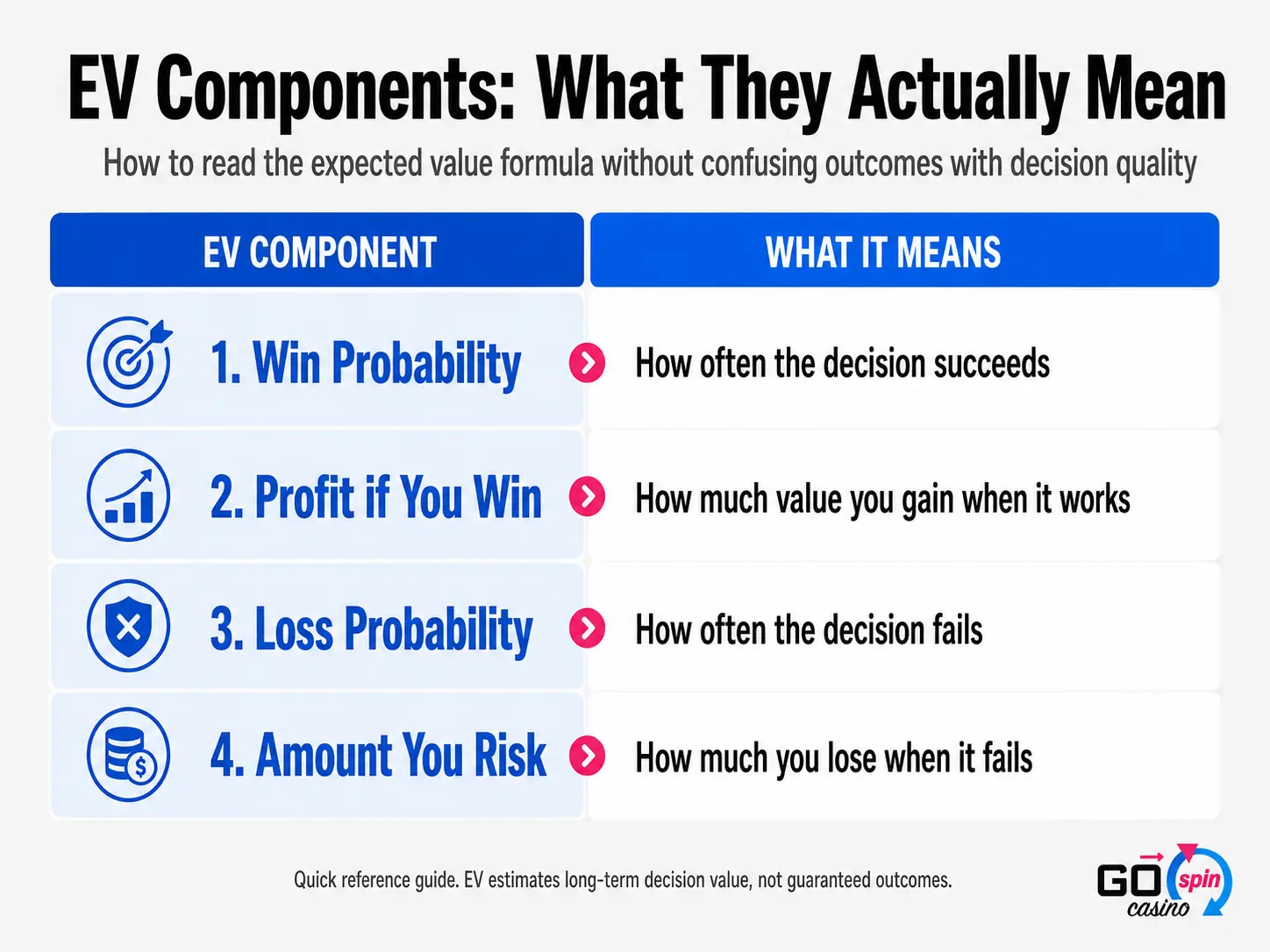
Basit bir örnek, EV formülünü daha anlaşılır hale getirir.
€/$300 kazanma ihtimalinin 50% ve €/$100 kaybetme ihtimalinin 50% olduğu bir karar düşünün.
EV = (0,50 × €/$300) – (0,50 × €/$100)
EV = €/$150 – €/$50
EV = +€/$100
Bu kararın beklenen değeri €/$100’dür. Bu, oyuncunun her seferinde €/$100 kazanacağı anlamına gelmez. Aynı kararın tekrar tekrar alınmasıyla elde edilen ortalama değerin pozitif olduğu anlamına gelir.
İşte birçok kumar hatası buradan kaynaklanıyor. Oyuncular genellikle EV’nin bir tahmin aracı gibi davranmasını isterler. Oysa EV bu amaçla tasarlanmamıştır. EV, bundan sonra ne olacağını söylemez. Kararın, uzun vadede ne kadar değer taşıdığını tahmin eder.
Bu fark, pokerde, bahislerde ve kumarhane bonuslarında önemlidir. Tek bir sonuç yanıltıcı olabilir. Tekrarlanan kararların oluşturduğu bir örneklem ise genellikle gerçeği yansıtır.
+EV ve -EV: Sonuç Neden Yanıltıcı Olabilir?
A +EV kararı zaman içinde kâr elde etmesi veya değer yaratması beklenir. A -EV kararı zamanla zarar vermesi veya değer kaybına yol açması beklenmektedir.
İşin zor yanı, kısa vadeli sonuçların her zaman kararın kalitesiyle örtüşmemesidir. Pozitif beklenen değer (EV) olan bir karar, anında kayba yol açabilir. Negatif beklenen değer (EV) olan bir karar ise bir kez kazanç sağlayarak oyuncuya kendini akıllı hissettirebilir. İşte bu nedenle, poker ve bahislerde sonuca dayalı düşünme tehlikelidir.
Kazanmak, kararın otomatik olarak doğru olduğu anlamına gelmez. Kaybetmek de, kararın otomatik olarak yanlış olduğu anlamına gelmez. Poker, kısa vadede sonuçları ödüllendirir; ancak zamanla, tekrarlanan yanlış fiyatlandırmalar, zayıf varsayımlar ve duygusal kararları cezalandırır.
İşte basit bir karşılaştırma:
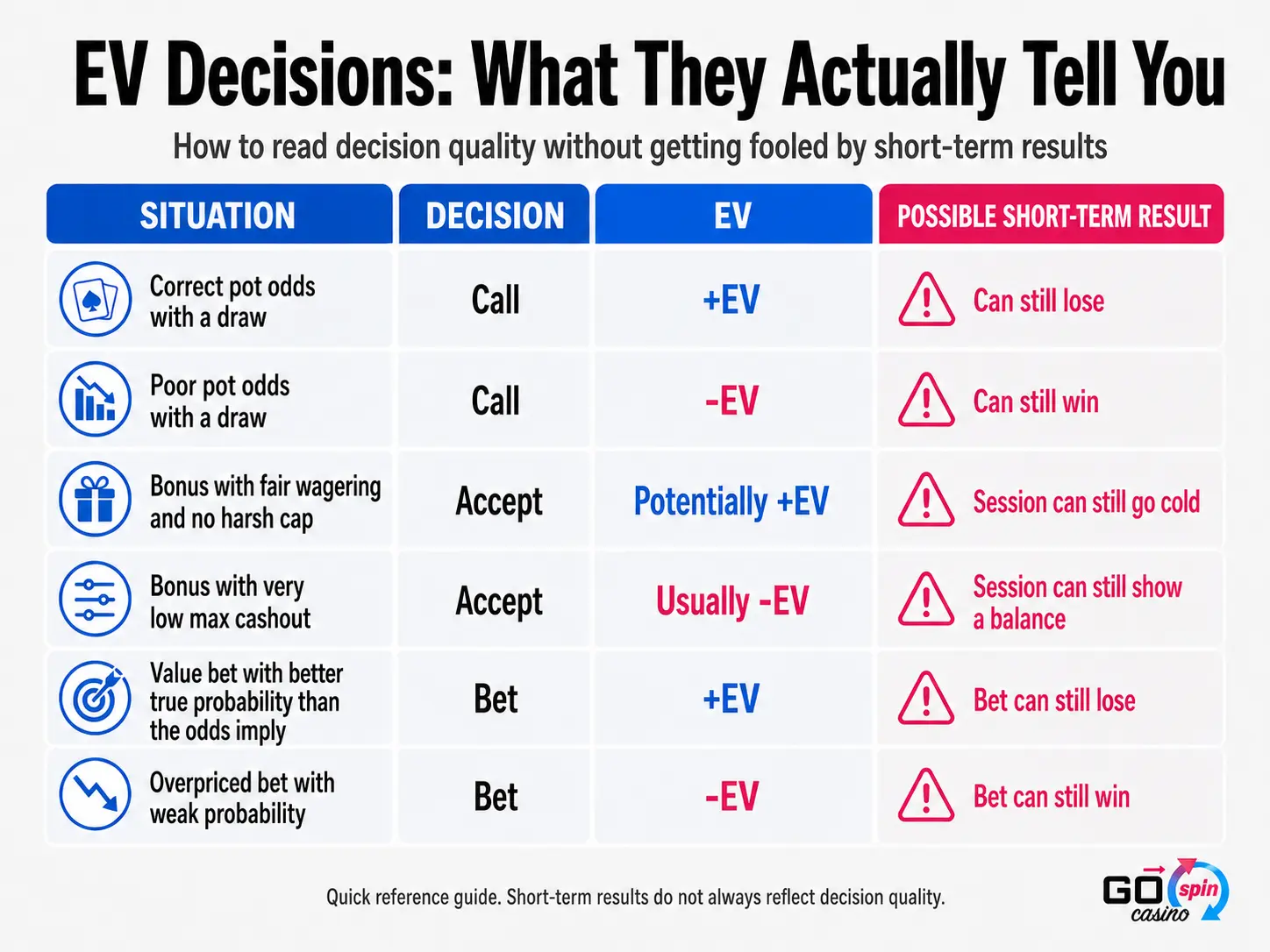
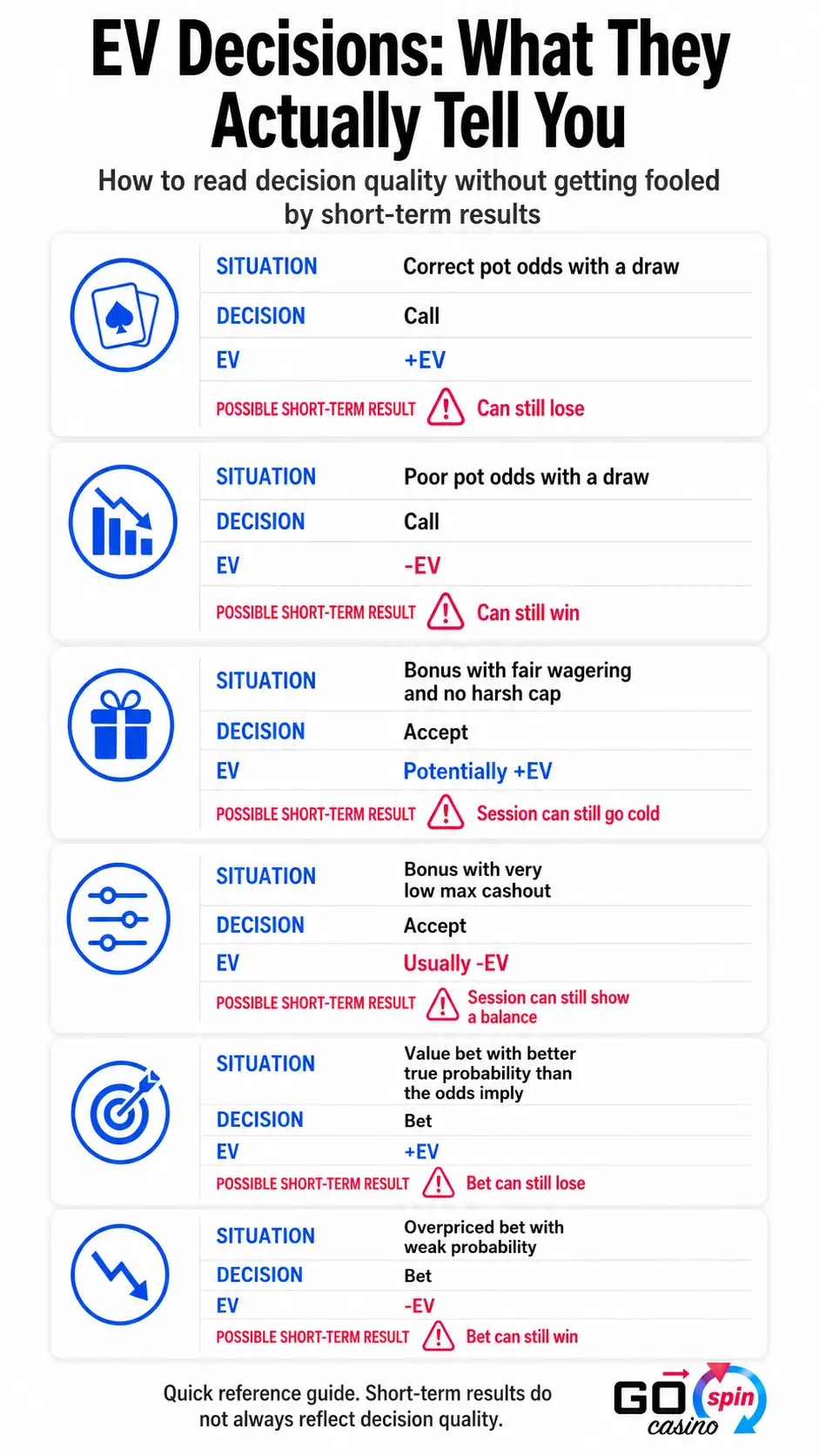
İşte bu yüzden deneyimli oyuncular önce kararı, sonra da sonucu değerlendirir. Sonuç elbette oyun sermayesi açısından önemlidir, ancak her zaman olayın bütününü yansıtmaz.
Doğru oranlarla görme kararı alıp kaybeden bir poker oyuncusu, otomatik olarak oyundan çekilmemelidir. İyi bir oran bulup kaybeden bir bahisçi, yaptığı analizin işe yaramadığını varsaymamalıdır. Zayıf bir bonusla kazanan bir kumarhane oyuncusu, bu teklifin uzun vadede gerçek bir değeri olduğunu varsaymamalıdır.
Sonuç, karar kalitesiyle aynı şey değildir. EV, bu ikisini birbirinden ayıran araçtır.
Bu zihniyet, oyuncuları iki maliyetli alışkanlıktan korur: şanssız kayıpların peşinden koşmak ve şanslı galibiyetlerin ardından aşırı özgüven kazanmak.
Poker’de Beklenen Değer Örneği: Çekiliş Eliyle Görmek
APoker’de beklenen değer kavramını en net şekilde gösteren örnek, bir bahis karşısında çekişme durumudur.
Diyelim ki şöyle bir durum var: Pot'ta €/$120 var ve fiyatı €/$40’ı arayın. Oyuncu, bu çekilişin yaklaşık Her 3 seferden 1'inde. Bu, beraberliğin yaklaşık 3 defadan 2'sinde.
Oyuncu görme yapıp kazanırsa, kâr €/$120’dir; bu, görme yapılmadan önceki pot tutarı anlamına gelir.
Oyuncu görme yapıp kaybederse, maliyeti €/$40 olur.
EV formülünü kullanarak:
EV = (1/3 × €/$120) – (2/3 × €/$40)
EV = €/$40 – €/$26,67
EV = +€/$13,33
Bu call hamlesi +EV’dir. Çoğu zaman yine de kaybedilir, çünkü draw sadece yaklaşık üçte bir oranında tutar. Ancak bu bedel, tekrarlanan durumlarda bu call hamlesini kârlı hale getirecek kadar iyidir.
Şimdi sadece bir sayıyı değiştirin.
Tencere hâlâ €/$120, ancak bu arama artık €/$80.
EV = (1/3 × €/$120) – (2/3 × €/$80)
EV = €/$40 – €/$53,33
EV = -€/$13,33
Aynı çekiliş. Aynı kazanma şansı. Farklı fiyat. İlk bahis kârlı. İkinci bahis ise kârlı değil.
Fiyat her şeyi değiştirir. Bir el, tek başına değerlendirildiğinde görmeye değmez. Bu, pota, bahis miktarına, elin gelişme olasılığına ve geriye kalan paraya bağlıdır.
Bu durum, oyuncuların kendi oyun seanslarını neden sıklıkla yanlış değerlendirdiklerini de açıklıyor. Kaçırdıkları river elini hatırlıyorlar çünkü bu onlara acı veriyor. O call’un fiyatlandırmasının doğru olup olmadığını ise unutuyorlar. EV odaklı düşünme, odağı oyuncunun kontrol edebildiği kısma geri getirir.
Daha az baskı altında karar verme becerilerini test etmek isteyen oyuncular da şunu deneyebilirler: ücretsiz çevrimiçi video poker oyunları gerçek parayla oynamaya geçmeden önce.
EV Bahisleri: Oranlarda Değer Bulmak
EV bahisleri, poker EV’siyle aynı mantığı kullanır; ancak karar, pot oranları yerine bahis oranlarına dayandırılır. Bir değer bahisi, sadece kazanan bir bahis değildir. Bu, sunulan bahis oranlarının sonucun gerçek olasılığından daha iyi olduğu bir bahistir.
İşte net bir örnek.
Bir spor bahis sitesinin oranları A Takımı’nın galibiyetine 2,10 ondalık oran. 2,10'luk ondalık oran, şu olasılığı ifade eder:
1 ÷ 2,10 = 47,6%
Maç eşleşmesini, sakatlıkları, piyasa hareketlerini ve son dönemdeki performansları inceledikten sonra, gerçek olasılık şuna daha yakın görünüyor: 54%.
Her bir €/$1 stake edildi, bahis kazanırsa elde edilecek kâr şudur: €/$1.10. Bahis kaybedilirse kaybedilen miktar şudur: €/$1.00.
EV formülünü kullanarak:
EV = (Probability'lik kazanç × Kazanç durumunda elde edilecek kâr) – (Probability'lik kayıp × Stake)
EV = (0,54 × €/$1,10) – (0,46 × €/$1,00)
EV = €/$0,594 – €/$0,460
EV = +€/$0,134
Bu, bahsin beklenen değerinin yaklaşık +€/$0,13, yatırılan her €/$1 başına.
Bu, A Takımı’nın maçı kazanacağı anlamına gelmez. Bunun anlamı, olasılık tahmini doğruysa, oranın olması gerekenden daha iyi olduğudur. Benzer bahislerden oluşan geniş bir örneklemde, bu tür bir avantaj kârlı hale gelebilir.
Bunun tam tersi de sık sık yaşanır. Popüler bir takımın oranı, bahisçilerin o takımı sevmesi nedeniyle 1,60 olarak belirlenebilir; ancak gerçek kazanma olasılığı, oranın ima ettiğinden daha düşükse, takım o gün kazansa bile bahis -EV olabilir.
Bahis şirketinin kâr marjı, hatalı olasılık tahminleri ve duygusal bahisler, hesaplamayı çarpıtabilir. Beklenen değer (EV) temelli bahis, ancak olasılık verileri doğru olduğunda işe yarar. Kendinden emin bir tahmin, güçlü bir avantajla aynı şey değildir.
Değer bahsi kaybedebilir. Kötü bir bahis kazanabilir. Önemli olan orandır.
İşte bu nedenle EV bahisleri, tahmin yapmaktan ziyade piyasa değerlendirmesine daha yakındır. Asıl sorulması gereken soru “bu kazanacak mı?” değil; asıl sorulması gereken soru “bu oran, gerçek olasılığın hak ettiği değerden daha mı yüksek?”
Kumarhane Bonuslarında Beklenen Değer
Beklenen değer, sadece poker masasında veya spor bahisleri piyasalarında yararlı değildir. Aynı zamanda kumarhane bonuslarını değerlendirmek için en iyi yöntemlerden biridir.
Bir bonus başlığı çok cazip görünebilir, ancak asıl değer şartlarda yatmaktadır. Bahis şartları, maksimum para çekme limiti, uygun oyunlar, oyun katkı oranı, RTP, bahis limitleri ve süre sınırları, bir teklifin gerçek beklenen değerini (EV) etkileyen faktörlerdir.
Şu örneği ele alalım:
Bir kumarhane şunları sunar: 100% bonusu, en fazla €/$200. İlk bakışta teklif cazip görünüyor. Bir oyuncu €/$200 yatırdığında, bonus olarak yine €/$200 alıyor. Sorun, şartlar hesaplandığında ortaya çıkıyor.
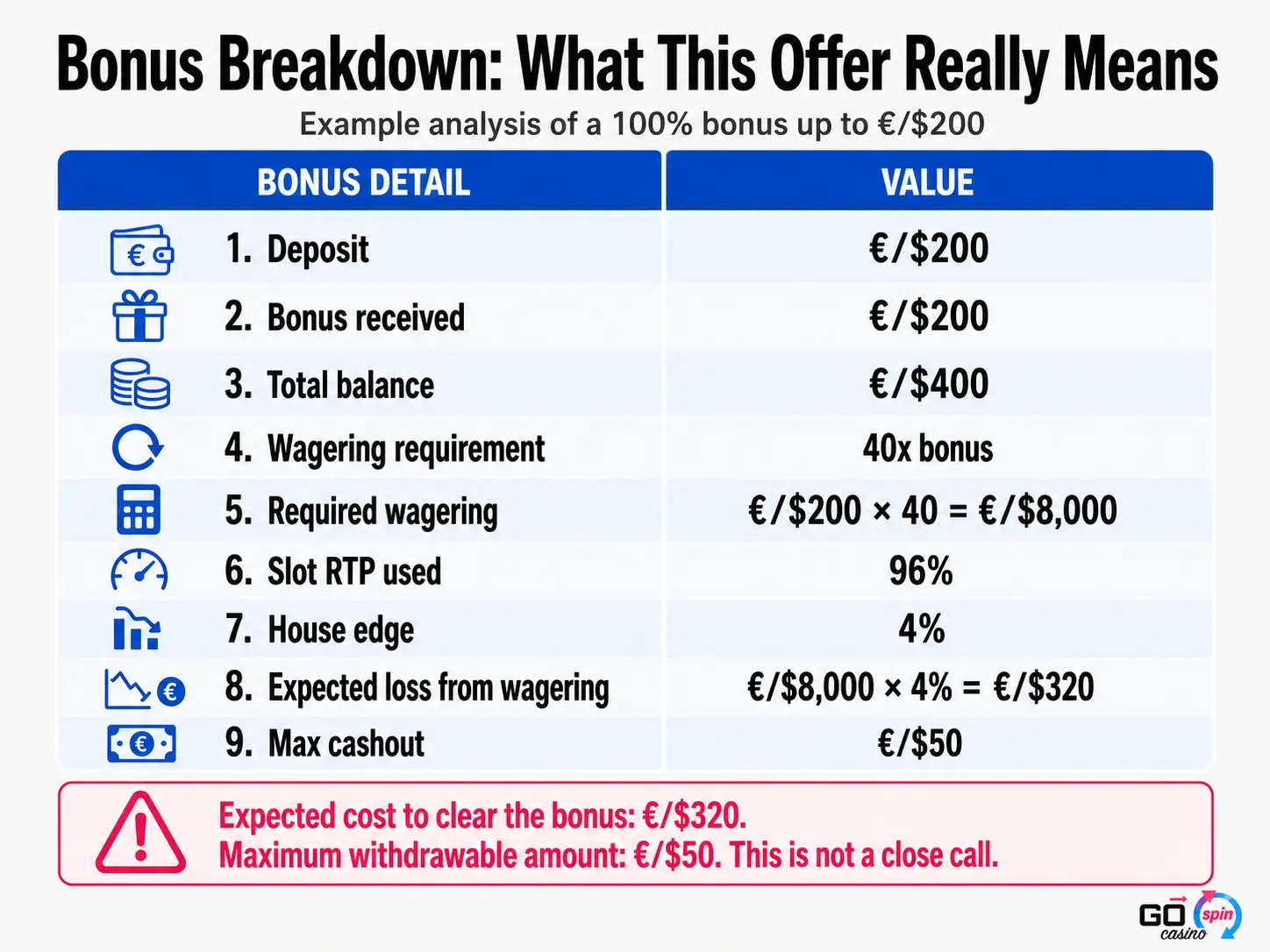
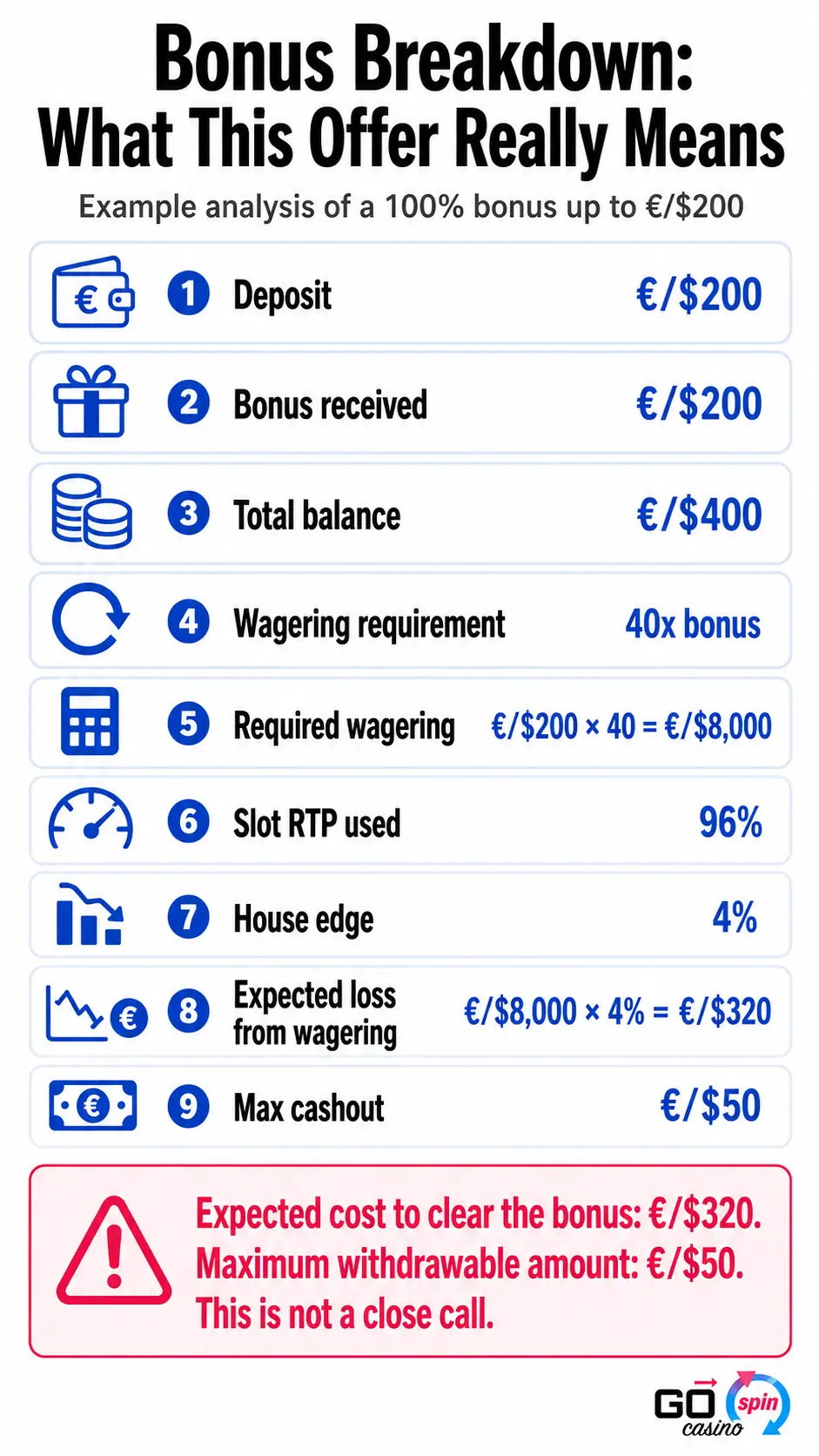
Bahis şartı, toplamda €/$8.000 tutarında bahis yapılmasını gerektirir. Oyuncu, RTP’si 96% olan slot oyunlarını kullanırsa, bu bahislerden kaynaklanacak beklenen kayıp yaklaşık olarak €/$320’dir. Bu durumda maksimum para çekme tutarı sadece €/$50'dir.
Bu durumda, bonusu tamamlamanın beklenen maliyeti (€/$320 tutarında zarar), oyuncunun çekebileceği en yüksek tutarın (€/$50) altı katından fazladır. Bu, hiç de yakın bir durum değildir. Teklif görsel olarak hala cazip görünebilir, ancak rakamlar gerçek beklenen değeri oldukça negatif hale getiriyor.
Bu, en önemli nedenlerden biridir Bonus değerlendirmeleri, reklamda belirtilen yüzdeyle sınırlı kalmamalıdır. Bahis şartları daha yüksekse, maksimum para çekme limiti daha düşükse veya uygun oyunlar çok kısıtlıysa, 300% bonusu 100% bonusundan daha dezavantajlı olabilir.
Asıl önemli nokta pazarlamadır. Elektrikli araç, bu terimlerin içinde yer alır.
Go Spin Casino promosyonları değerlendirirken, asıl önemli olan sadece teklifin ne kadar büyük göründüğü değildir. Daha önemli olan soru, bahis şartları, RTP, oyun katkı payı ve para çekme kuralları göz önünde bulundurulduğunda, bonusun oyunculara gerçekçi bir kazanç yolu sunup sunmadığıdır.
Teklifleri karşılaştıran oyuncular, şunla başlayabilirler: en yeni casino bonusları ve para yatırmadan önce her bir promosyonun bahis şartlarını, uygun oyunları ve para çekme limitlerini kontrol edin.
Oyuncuların Sıkça Yaptığı EV Hataları
Beklenen değer, kağıt üzerinde basit görünse de, oyuncular gerçek kumar kararlarında genellikle bunu yanlış kullanırlar. Beklenen değerle ilgili hataların çoğu, sonuçları çok çabuk değerlendirmeye çalışmaktan, yetersiz olasılık tahminleri kullanmaktan ya da bir hamlenin değerini değiştiren gizli maliyetleri göz ardı etmekten kaynaklanır.
Kararı yalnızca sonucuna göre değerlendirmek
En sık yapılan hata, bir galibiyeti iyi bir kararın kanıtı, bir yenilgiyi ise kötü bir kararın kanıtı olarak görmek.
Bir oyuncu doğru pot oranlarıyla call yapabilir, çekişi kaçırabilir ve yine de kârlı bir karar verebilir. Başka bir oyuncu ise berbat oranlarla call yapabilir, mucizevi bir kart alabilir ve yine de kötü bir karar verebilir. Sonuç hemen ortadadır. Kararın kalitesini değerlendirmek ise daha fazla disiplin gerektirir.
Bu önemli bir konudur, çünkü sonuca dayalı düşünme kötü alışkanlıklar yaratır. Oyuncular, bir kez işe yaradığı için şans eseri yaptıkları hataları tekrarlarlar; kısa vadede varyansın kendilerine zarar vermesi nedeniyle ise etkili hamlelerden vazgeçerler.
Yanlış olasılık tahminlerinin kullanılması
EV, formülün içinde kullanılan sayılar kadar iyidir. Olasılık tahmini yanlışsa, hesaplama düzgün görünse de yine de yanlış bir karara yol açabilir.
Örneğin, bir poker oyuncusu, bir draw’ın % oranında kazanacağını varsayabilir; oysa gerçek equity %“ye daha yakındır. Bir bahisçi, piyasa ve eşleşme daha düşük bir olasılık gösteriyor olsa bile, bir takımın ”daha güçlü hissettirdiği” için % şansa sahip olduğunu iddia edebilir. Her iki durumda da, matematiksel hesaplamaya başlamadan önce EV hesaplaması güvenilmez hale gelir.
Elektrikli araç satın alma konusunda faydalı bir karar, iyimser bir olasılıkla değil, gerçekçi bir olasılıkla başlar.
Rake, komisyon ve bonus koşullarını göz ardı ederek
Gerçek kumar ortamlarının maliyetleri vardır. Poker salonları komisyon alır. Spor bahisleri, oranlara kâr marjı ekler. Kumarhaneler ise bonuslara bahis şartları, maksimum para çekme limitleri, bahis üst sınırları ve oyun kısıtlamaları uygular.
Bu maliyetleri göz ardı etmek, elektrikli araçları gerçekte olduğundan daha cazip gösterir.
Komisyon kesilmeden önce kârlı görünen bir poker bahsi, komisyon kesildikten sonra marjinal hale gelebilir. Fiyatı makul görünen bir spor bahsi, bahis şirketinin kâr marjı hesaba katıldığında zayıf bir seçenek haline gelebilir. Afişte cömert görünen bir kumarhane bonusu, bahis ve para çekme kuralları hesaplandığında zarara dönüşebilir.
Yüzeysel rakamlar nadiren tüm gerçeği yansıtır.
Katlamayı düşünmek her zaman basittir 0 EV
Birçok başlangıç seviyesindeki poker örneğinde, oyuncu daha fazla para yatırmadığı için pas geçme, mevcut karar noktasında 0 EV olarak değerlendirilir. Bu basitleştirme yararlıdır, ancak her durumda tam bir tablo sunmaz.
EV, referans noktasına bağlıdır. Kontrol hakkı varsa, pota zaten para girmişse veya ileride yapılacak hamleler önemliyse, karşılaştırma daha incelikli olabilir. Pas geçmek daha fazla kaybı önleyebilir, ancak başka bir seçeneğin beklenen değeri daha yüksek olduğunda potansiyel bir değeri de feda etmek anlamına gelebilir.
Bundan çıkarılacak pratik ders basit: Sadece riskten kaçınmanın getirdiği duygusal rahatlığı değil, mevcut seçenekleri de karşılaştırın.
Bahis sermayesi ve varyansı göz ardı etmek
Bir karar +EV olsa bile, oyuncunun oyun sermayesi için aşırı dalgalanmaya neden olabilir. İşte bu noktada EV ve oyun sermayesi yönetimi birbiriyle uyumlu bir şekilde işlev görmelidir.
Bir bahisçi gerçek bir avantaj bulabilir, ancak çok agresif bahis yapmak, normal bir düşüş döneminde yine de iflasa yol açabilir. Bir poker oyuncusu kârlı küçük fırsatları değerlendirebilir, ancak sermayesi varyansı kaldıramazsa, strateji kırılgan hale gelir.
Beklenen değer, bir kararın zaman içinde kârlı olup olmayacağını gösterir. Bankroll yönetimi ise, oyuncunun bu avantajın anlamlı hale gelmesi için yeterince uzun süre oyunda kalıp kalamayacağını belirler.
Bir iyi yenilginin, bir dizi kötü karara dönüşmesine izin vermek
Tehlikeli an genellikle iyi bir kararın kaybedilmesinden sonra gelir. Bir oyuncu doğru kararı verir, river’da istediğini alamaz, ardından seansın kendisine “borçlu” olduğu düşüncesiyle elleri zorlamaya başlar. Bir bahisçi, maçın sonlarında atılan bir gol yüzünden +EV'li bir bahsi kaybeder, ardından aynı avantajı olmadan bir sonraki bahiste saldırıya geçer. Bir kumarhane oyuncusu, bonus seansında şanssız bir dönem geçirir, ardından bahis şartlarını yerine getirmek için bahis miktarını artırır.
İlk karar doğru olabilir. Asıl zarar, sonrasında ortaya çıkan tepkilerde ortaya çıkıyor.
İyi bir EV yaklaşımı, sadece doğru hesaplamayı yapmakla sınırlı değildir. Sonuç, hesaplamaya aykırı çıktığında bile tutarlı kalabilmektir.
Kumarhane oyunlarını değerlendiren herkes şunları da karşılaştırabilir: yüksek RTP slotları oynamaya başlamadan önce, çünkü oyun seçimi her bonus ve oyun bütçesi kararının ardındaki uzun vadeli istatistikleri etkiler.
Son Yorum: Elektrikli Araçlar, Ciddi Oyuncuların Düşünce Biçimi
Beklenen değer, bir sonraki kartın, dönüşün, golün veya sonucun ne olacağını bilmekle ilgili değildir. Sonuç ortaya çıkmadan önce, alınan kararın mantıklı olup olmadığını değerlendirmekle ilgilidir.
İşte bu nedenle EV, poker, bahis ve kumarhane bonusları açısından büyük önem taşır. EV, oyuncuları kumar dünyasındaki en pahalı iki yanılsamadan korur: her galibiyetin beceriyi, her yenilginin ise başarısızlığı kanıtladığını düşünmek. Her ikisi de yanlış olabilir. EV’nin tek sorduğu şey, karar anında bedel, olasılık ve riskin mantıklı olup olmadığıdır.
EV kavramını anlayan bir oyuncunun, her oturumda bunu doğrulamasına gerek yoktur. Tekrarlanabilir bir avantaj, güvenilir rakamlar ve kötü sonuçların daha da kötü kararlara dönüşmesini engelleyecek kadar disiplin gereklidir.
Bir sonraki bonusunuzu almadan önce, başlığın ardındaki gerçek değeri karşılaştırın. Go Spin Casino bonus incelemeleri, para yatırmadan önce bahis şartlarını, RTP’yi, uygun oyunları ve para çekme limitlerini kontrol etmenize yardımcı olur.
SSS
Pokerde beklenen değer, aynı durumun birçok kez tekrarlanması halinde bir oyuncunun aldığı bir karardan kazanmasını veya kaybetmesini bekleyebileceği ortalama tutardır. Bu kavram, oyuncuların uzun vadede bir “call”, “bet”, “raise”, “fold” veya “check” hareketinin kârlı olup olmadığını değerlendirmelerine yardımcı olur.
Elektrikli araçlar için temel formül şöyledir: EV = (Kazançtaki Probability × Kazanılan Miktar) – (Kaybettiğiniz Probability × Kaybedilen Miktar). Pokerde bu, genellikle potu kazanma olasılığını, oyuna devam etmek için riske atılması gereken miktarla karşılaştırmak anlamına gelir.
+EV, bir kararın beklenen değerinin pozitif olduğu ve zaman içinde kâr veya değer yaratmasının beklendiği anlamına gelir. -EV ise bunun tam tersidir. Örneğin, €/$1 tutarındaki bir bahsin EV’si +€/$0,13 ise, bu bahis +EV’dir. Aynı bahsin EV değeri -€/$0,13 ise, bu bahis -EV'dir. Kısa vadeli sonuçlar her iki yönde de olabilir.
Evet. +EV bir poker hamlesi, varyansın tek tek elleri etkilemesi nedeniyle yine de kayba yol açabilir. Örneğin, bir oyuncu doğru pot oranlarıyla call yapıp yine de çekişi kaçırabilir. Bu karar, anlık sonuç bir kayıp olsa bile uzun vadede kârlı olabilir.
EV bahisleri, oranların sonucun gerçek olasılığından daha yüksek olduğu bahisleri bulmak anlamına gelir. Bu sadece kazananları seçmekle ilgili değildir. Tekrarlanan bahislerde kâr getirebilecek oranları belirlemekle ilgilidir.