
People play slots because they’re fast, easy to understand, and built around the possibility of turning a small bet into a bigger result. The simplest answer is that they’re not only chasing the best odds, they’re chasing potential.
A small stake can trigger free spins, a multiplier, a jackpot, or a bonus round that changes the whole session. The outcome is random, but the experience doesn’t feel empty. Good slot game design turns waiting, movement, sound, near misses, and reward signals into a rhythm that keeps players engaged.
This is why people play slots even when they know the odds are not built in their favour. Slots are simple, fast, colourful, low-pressure, and packed with potential. There’s no dealer watching, no table strategy to memorise, no sports form to study, and no complicated decision tree. The player chooses a game, sets a stake, and spins.
But the best answer is not just “because slots are fun.” Slot appeal comes from a more powerful mix: low skill barrier, fast access, unpredictable rewards, themes, jackpots, RTP perception, volatility, online casino lobby design, free spins, and the feeling that the next spin could matter.
There’s also a responsible gambling side that belongs in the conversation. The same features that make slots entertaining, fast play, unpredictable outcomes, mobile access, and emotional highs, can become risky when players start chasing losses or treating the next spin like a way to recover money.
Understanding why slots feel so appealing helps players compare games more clearly, recognise the psychology behind the spin, and keep the experience inside healthy limits.
Table of contents
Why People Play Slots, The Direct Answer
People play slots because they combine entertainment, simplicity, speed, and the possibility of a big win in one easy format.
A player doesn’t need to understand blackjack charts, poker ranges, roulette systems, sportsbook odds, or live dealer etiquette. Slots remove friction. Choose a theme, pick a stake, press spin, and the game does the rest.
The main reasons are clear:
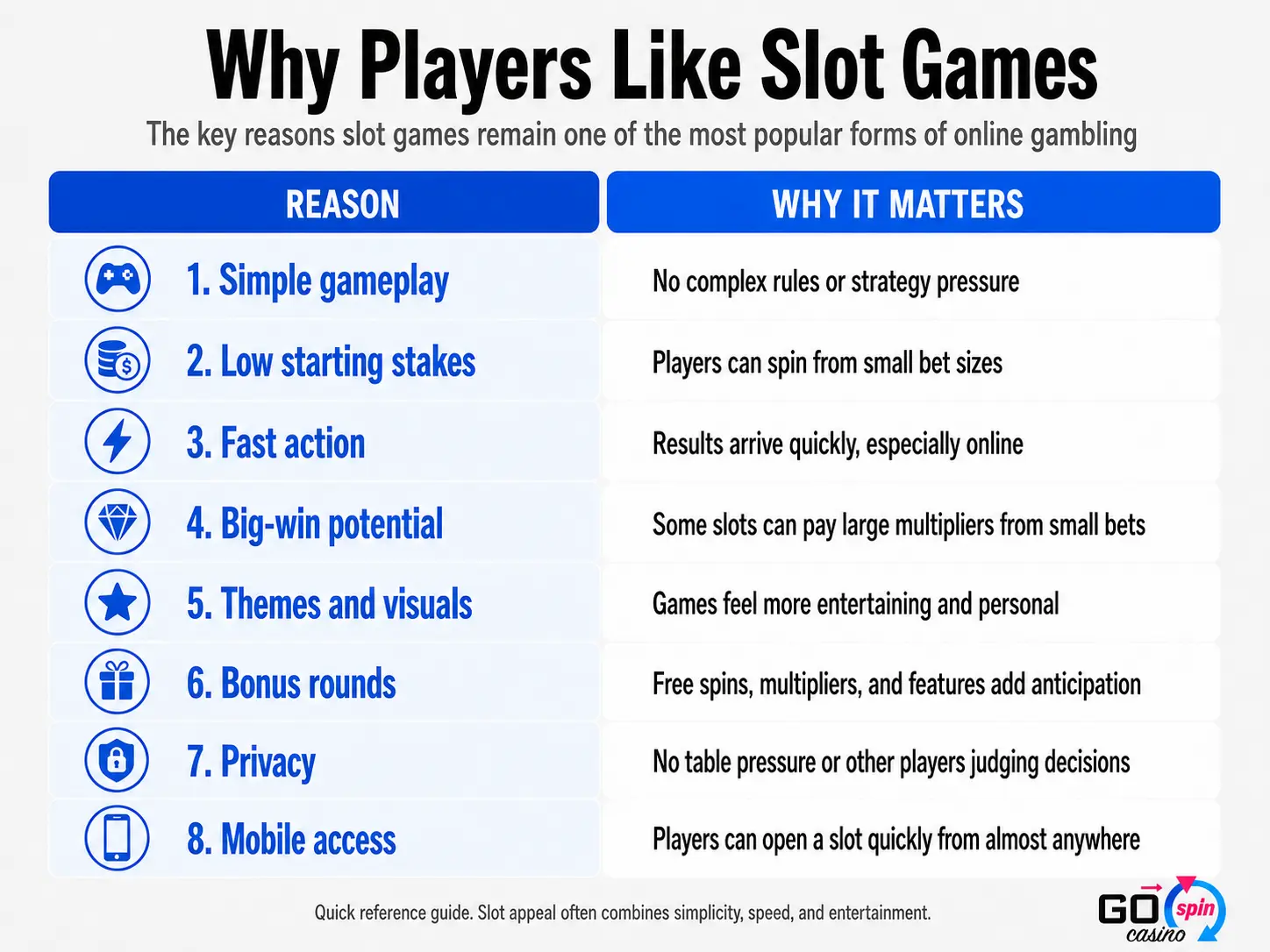
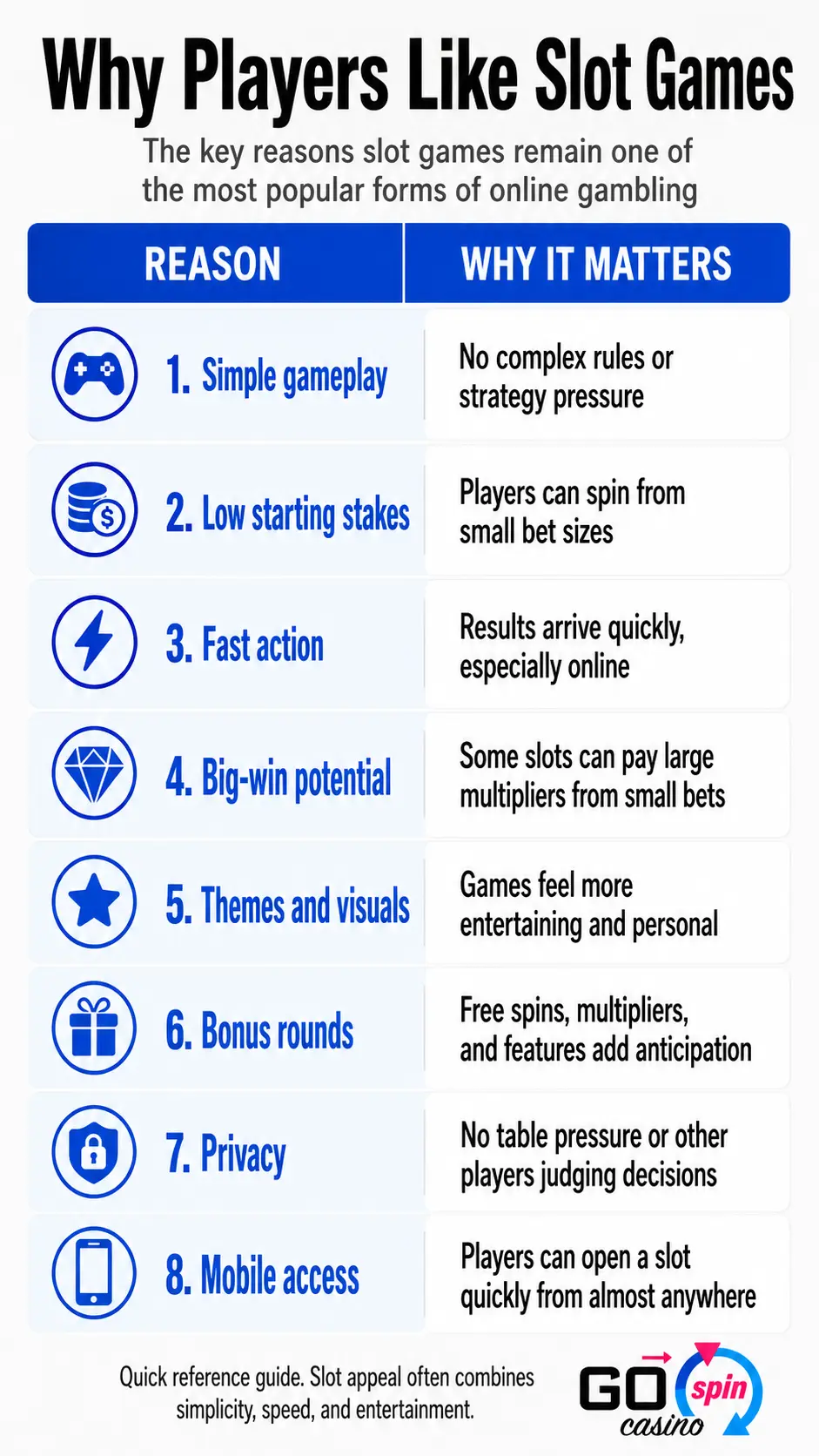
That explains why slots attract casual players, bonus hunters, jackpot chasers, mobile casino users, and players who want a quick casino session without overthinking every move.
The mistake is assuming every slot player believes they have an edge. Most don’t. Many players understand that slots are chance-based. They still play because the entertainment value, the pace, and the “what if” feeling are strong enough to make the session appealing.
Potential vs Expectation: The Real Reason Slots Work
Players chase potential, not expectation.
Potential is what could happen. Expectation is what the game is designed to return over the long run.
Those two things are not the same.
A blackjack session might give a player more decisions. Poker can reward skill. Sports betting can reward research. But a slot can turn a small stake into a much larger result through a rare bonus round, a large multiplier, a jackpot, or a high max-win sequence.
That possibility is emotionally powerful.
A player betting a small amount on a high-volatility slot knows most spins won’t do much. But the game is selling the idea that one feature can change the session. That’s why jackpot slots, Megaways games, bonus buy slots, progressive titles, and high max-win games receive so much attention in casino lobbies.
The promise is not that every spin is smart. The promise is that one spin could become memorable.
That’s also where players need to stay sharp. Potential is not a plan. A slot showing a 10,000x max win does not mean that result is realistic in an ordinary session. A jackpot badge does not make the game more generous. A bonus round that almost landed does not mean the next one is closer.
Potential is the dream. Expectation is the math. Slots are built to make the dream feel close, even when the math still favours the house over time.
How Slot Machines Keep Players Engaged
Slot appeal is not built from one single mechanic. It comes from the way simple gameplay, anticipation, visual design, themes, and pacing work together.
Slots Are Easy to Start
Slots became popular because they’re easy.
A new player can open an online casino lobby and understand the basic action almost instantly. There’s a spin button, a balance, a stake selector, and a paytable for anyone who wants more detail. That accessibility gives slots a huge advantage over games that require confidence, patience, or decision-making skill.
Table games can feel intimidating. Poker can feel competitive. Sports betting requires research. Even blackjack, one of the more accessible table games, still asks the player to make decisions every hand.
Slots don’t ask for that kind of commitment.
This is a major part of online slot appeal. Players can open a game on mobile, play for a few minutes, test a demo version, or use free spins from a casino bonus without learning a full system first. For many users, slots are the easiest entry point into online casino entertainment.
That low barrier also explains why slots dominate casino lobbies. Providers release new games constantly, casinos promote them quickly, and players can sample several titles in one session. A fishing slot, an Egyptian slot, a Megaways slot, and a classic fruit machine can all sit one click apart.
The Psychology of the Next Spin
The emotional engine of a slot is not only the win. It’s the anticipation before the result.
A spin starts, the reels move, symbols land, and the player has a few seconds where anything still feels possible. Two bonus symbols appear. A wild drops into place. A multiplier climbs. The last reel slows down just enough to make the moment feel bigger.
Even when nothing major happens, the rhythm keeps moving.
This is why the “next spin” feeling is so powerful. Players are not just reacting to outcomes. They’re reacting to possibilities. Every spin is a small reset, and that reset gives the game its pace.
Near misses play a big role here. When two scatters land and the third just misses, it can feel like the game was close to triggering a bonus. In reality, each spin is governed by the game’s mechanics and RNG, but the player experience is emotional, not mathematical. The screen makes “almost” feel meaningful.
The same thing happens with bonus teases. Some slots build suspense with expanding reels, collection meters, respins, progressive symbols, or random features that can trigger without warning. The more a game can make the next moment feel alive, the stronger the engagement becomes.
A slot is not “due” because it almost paid. A bonus is not closer because the last few spins looked promising. From a game design perspective, the sensation of being close is one of the reasons slots are so hard to ignore.
Slot Game Design Is Built Around Feeling
Good slot game design is not just about symbols on reels. It’s about how the game feels from the first second to the cash-out button.
Modern online slots use sound, animation, pacing, movement, colour, character design, and reward feedback to make a session feel active. A basic win might trigger a quick sound effect. A bigger win might slow the count, flash the screen, expand the symbol animation, or add a dramatic pause before the total appears.
That feedback gives the player a sense of momentum.
Some slots with solid RTP still feel flat because the pacing is dull or the bonus round takes too long to appear. Others feel more engaging because the base game has enough movement, the feature tease is clear, and the reward signals are satisfying without becoming confusing.
Common design elements include:
- Cascading reels that make one spin feel like several moments
- Expanding wilds that create visible tension
- Bonus meters that show progress
- Free spins symbols that build anticipation
- Multipliers that can change the value of a result quickly
- Jackpot badges that keep a larger prize visible
- Sound effects that make wins feel more memorable
- Mobile layouts that make spinning feel instant and smooth
This is where online slots have become more sophisticated than older mechanical machines. The screen can change, expand, shake, zoom, unlock features, show side games, open bonus rounds, and display promotional overlays. The game is not only showing an outcome. It’s packaging the outcome.
That packaging is a major part of slot appeal.
Players are not only choosing maths. They’re choosing an experience. A high-volatility game with dramatic sound design and a visible max win can feel completely different from a low-volatility classic slot with steady small hits, even if both are built around the same basic idea: spin, wait, reveal.
Themes and Escapism Make Slots Easier to Choose
Casino lobbies are crowded. Themes help players make faster choices.
That’s why so many slots lean into familiar worlds: Ancient Egypt, fishing, Irish luck, mythology, fantasy, adventure, classic fruits, treasure hunts, animals, holidays, TV-style games, and branded entertainment. A theme gives the player an instant reason to click.
This is not only decoration. Themes create emotional shortcuts.
A player who likes classic fruit machines may want something simple and nostalgic. A player who chooses an adventure slot may want movement, features, and a bigger sense of progression. A fishing slot often suggests collection mechanics or cash symbols. A fantasy slot might suggest expanding wilds, multipliers, or cinematic bonus rounds.
The theme sets expectations before the reels spin.
This is also where escapism enters the picture. Slots don’t ask the player to beat another person, study a market, or make complex decisions. They offer a small visual world with its own rhythm. For some players, that’s the attraction: a short break, a colourful game, a chance-based session, and no need to think too hard.
Online casinos understand this well. That’s why slot lobbies often group games by category, provider, feature, or theme. Players don’t always search for a specific title. Sometimes they search for a feeling: classic, chaotic, premium, relaxed, high-risk, jackpot-heavy, or bonus-packed.
The right theme can make a technically average session feel more enjoyable. The wrong theme can make a strong game feel forgettable.
RTP, Volatility and Short-Term Slot Reality
RTP is useful, but it’s often misunderstood.
A slot’s RTP gives players a long-term theoretical return, calculated across a huge number of spins. It does not predict what will happen in one session, one bonus round, or one evening on mobile.
That’s why two players can play the same game and have completely different experiences. One might land a bonus early and leave ahead. Another might spin for longer and barely see a feature. Both outcomes can happen within the normal range of slot variance.
RTP helps compare games. It does not promise what tonight’s balance will look like.
This is where many players get frustrated. A slot with 96% RTP does not mean the player should expect to get €/$96 back from every €/$100 session. That figure only makes sense over a huge sample size. Short-term results can land far above or far below the theoretical number.
Volatility often shapes the real session experience more than RTP.
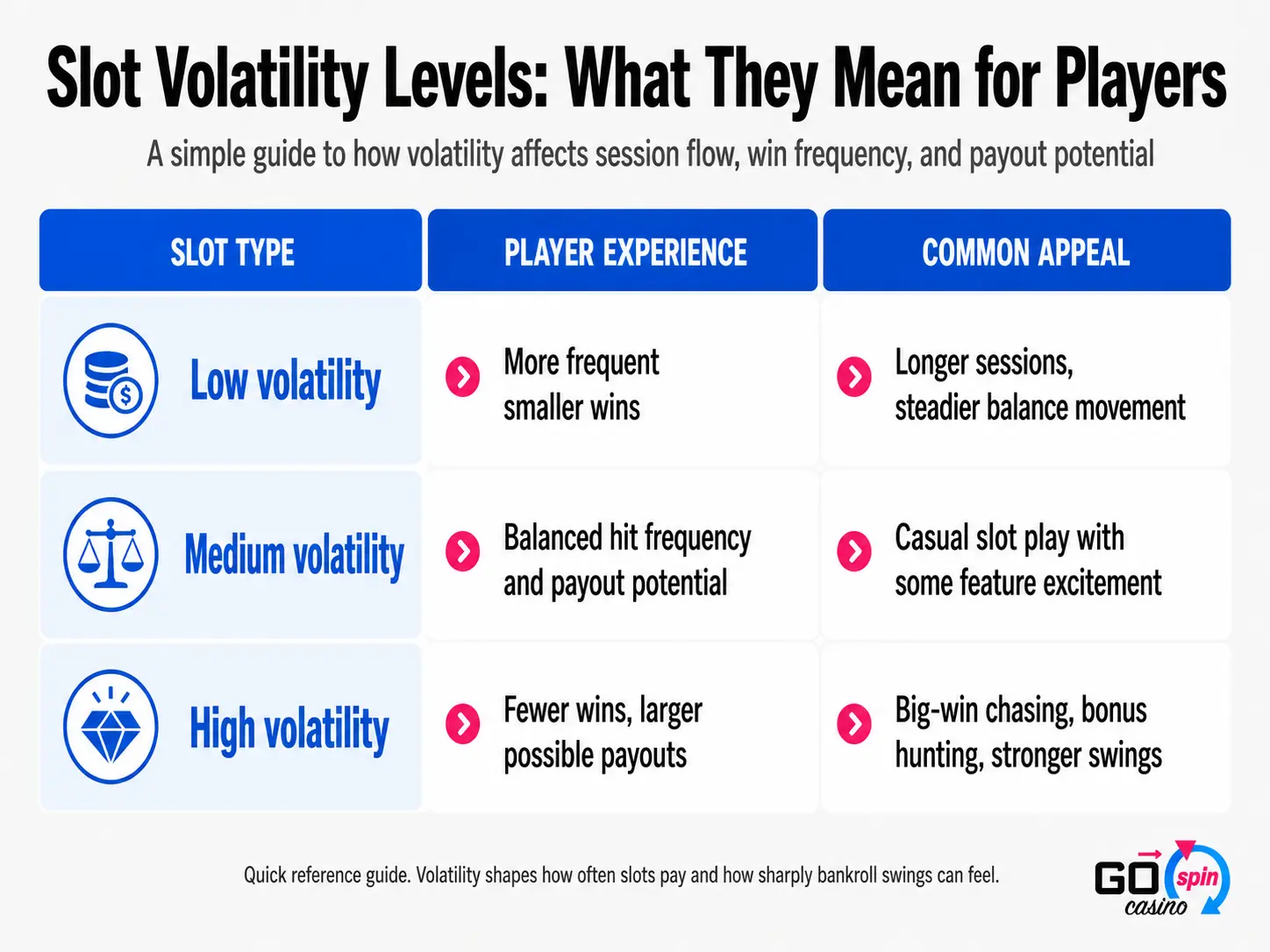
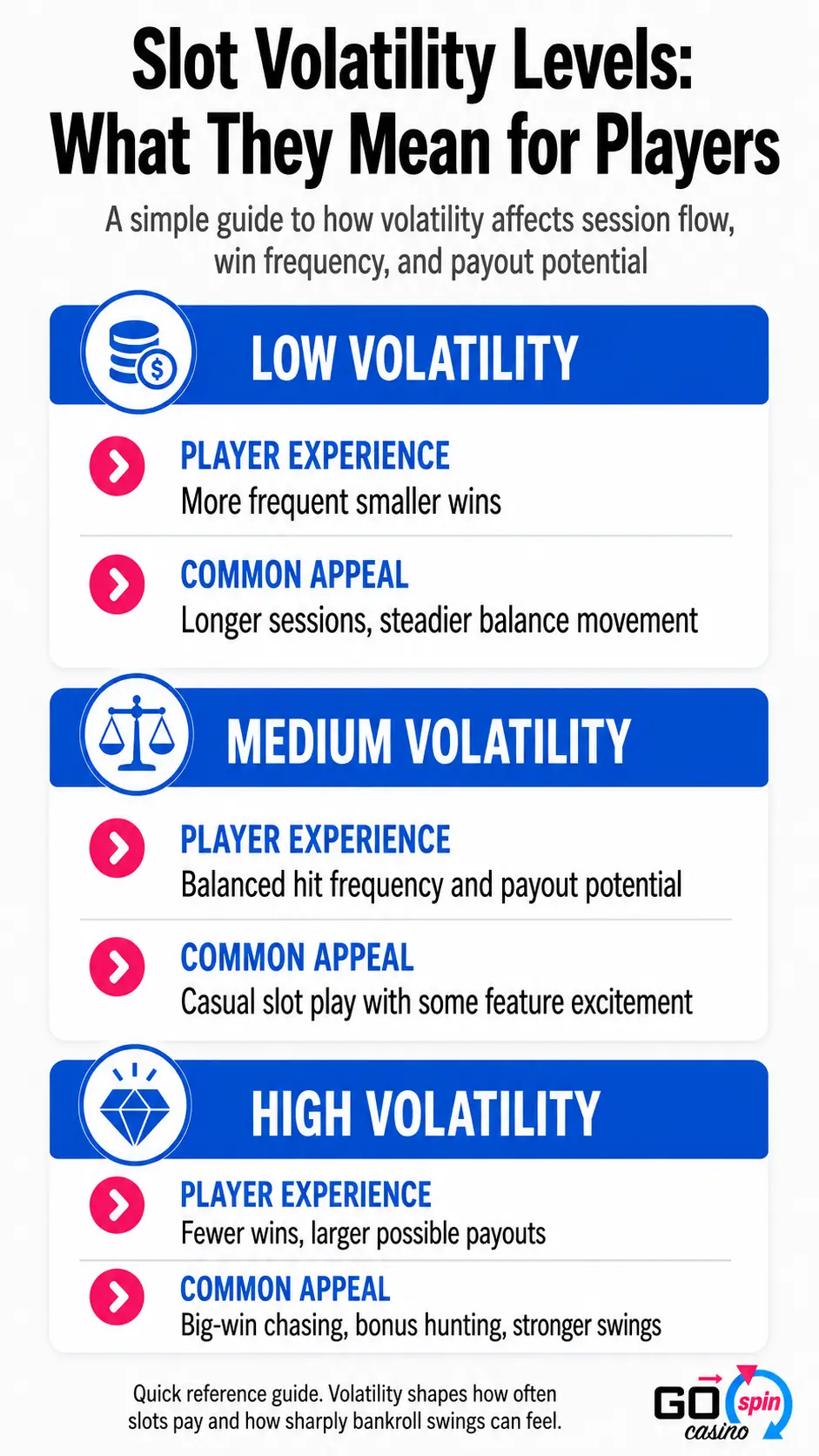
High volatility games can feel brutal when they’re cold. They can also feel incredible when the feature lands properly. Low volatility slots can feel more forgiving, but they usually don’t deliver the same dramatic upside. Medium volatility is often the easiest fit for casual players because it balances entertainment and potential.
This is why checking RTP alone is not enough. A 96% RTP slot can feel very different depending on volatility, bonus structure, hit frequency, max win, and stake size.
Players comparing games should look beyond the headline number. A stronger approach is to compare RTP, volatility, provider reputation, bonus features, and session style together. Go Spin Casino’s guide to best RTP slots is a practical starting point for players who want to filter games more carefully instead of choosing only by theme or jackpot badge.
How Online Casino Lobbies Amplify Slot Appeal
Online casinos didn’t invent slot appeal, but they made it more accessible, more personalised, and more constant.
A land-based casino has physical limits. An online casino lobby can offer thousands of games, multiple providers, demo versions, filters, tournaments, bonus promotions, jackpot categories, recommended games, and mobile access from almost anywhere.
That changes the experience before the first spin even starts.
Modern online casino lobbies are designed to guide attention. The layout is not random. It uses familiar triggers that make some games feel more urgent, trusted, popular, or exciting.
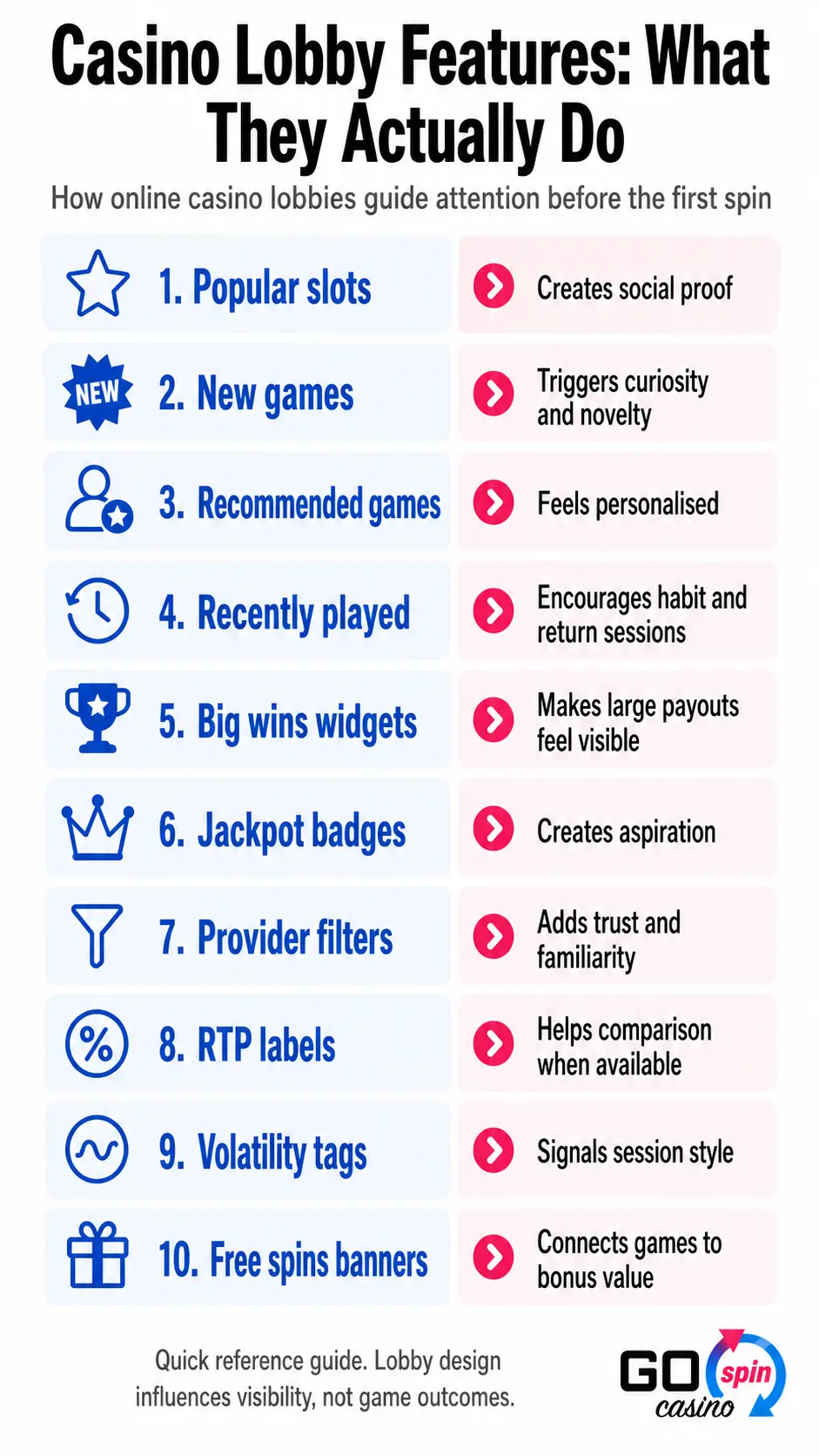
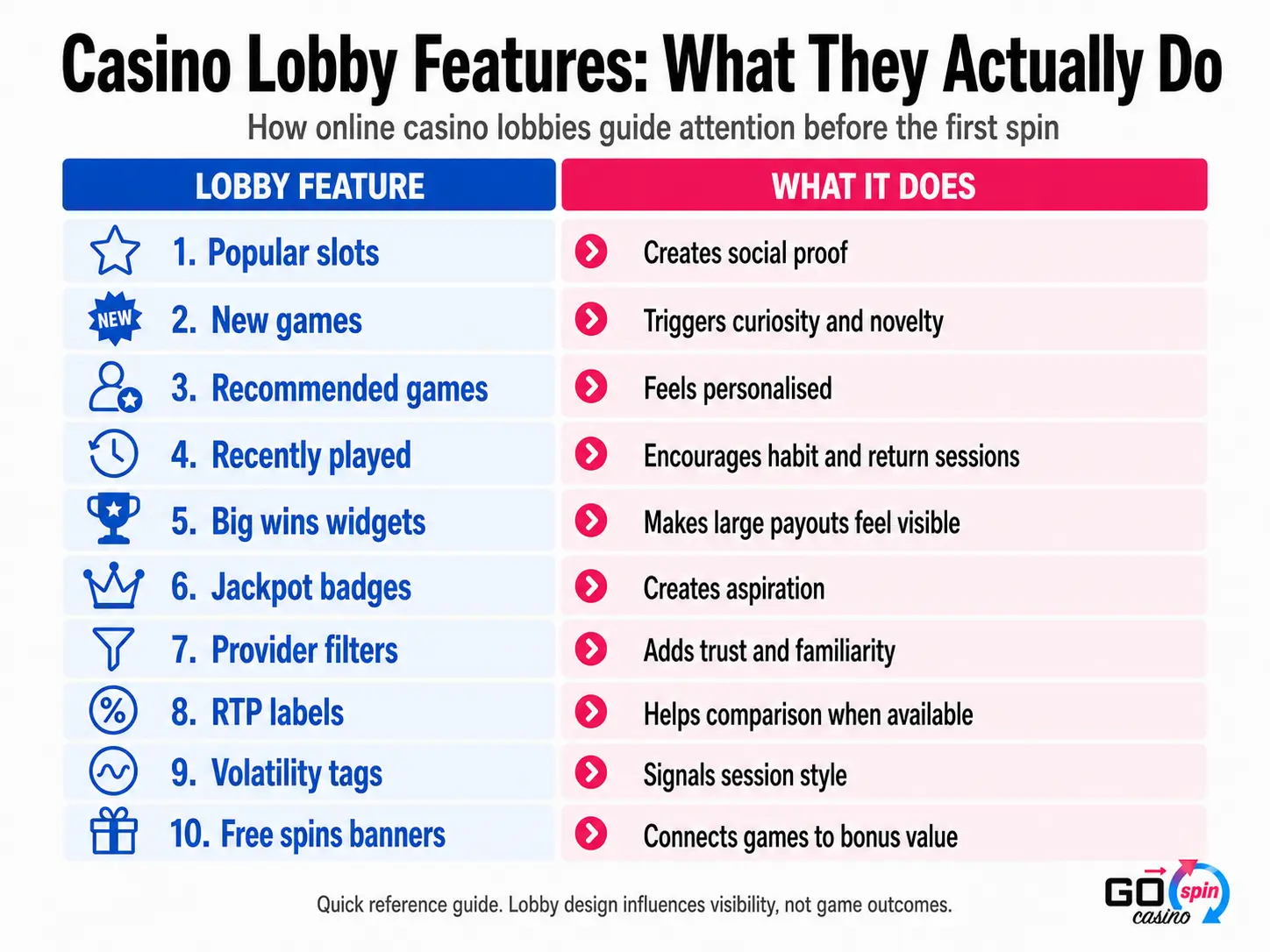
This is one of the biggest gaps in most discussions about why people play slots. The conversation often stops at lights, sounds, and dopamine. Online casino UX takes that same psychology and builds it into the lobby.
A “Popular Games” row makes a player feel that others are choosing those titles. A “New Slots” section turns novelty into a reason to click. A jackpot badge keeps the dream visible. A “Recommended” carousel can make the experience feel curated, even when the player is still facing thousands of options.
Casino lobbies also connect slots to promotions. Free spins, deposit bonuses, tournaments, cashback campaigns, and provider drops can all push certain titles into focus. A player may not choose a slot only because of its mechanics. They may choose it because it’s attached to a bonus, appears in a mission, or sits inside a promoted category.
For players, this means the best game is not always the loudest tile on the screen. It’s worth comparing games with a clear head, especially when a lobby is pushing jackpot slots, bonus buy titles, or high-volatility games.
Why Jackpots Feel So Powerful
Jackpots work because they make the top outcome visible.
Most slot wins are abstract until they happen. A jackpot is different. It sits on the screen, often with a live counter, a large number, or a dedicated badge. The prize becomes part of the experience before the player has won anything.
A jackpot turns potential into a fixed image. The player can see the target. Even if the odds are long, the prize feels present. That’s why progressive jackpots and network jackpots can be so compelling. The number becomes a story inside the game.
The same psychology applies to high max-win slots. A game that advertises 5,000x, 10,000x, or higher does not guarantee a result like that, but it creates aspiration. The player understands that most spins won’t land anywhere near the top payout. Still, the possibility gives the session a different emotional weight.
This is also why jackpot games need careful bankroll management. A visible prize can make a player stay longer than planned, especially after near misses or small feature teases. The jackpot is exciting, but it should never become the reason to ignore limits.
Players who want to test games without spending can start with free casino games before moving to real-money play.
When Slot Appeal Becomes Risky
Slot addiction can develop when the same features that make slots entertaining start driving unhealthy behaviour.
Fast play, easy access, unpredictable rewards, near misses, bonus chasing, and emotional highs can all become risky when a player loses control of time, spending, or expectations. The problem is not enjoying slots. The problem is when the session stops being entertainment and starts feeling like pressure.
Warning signs can include:
- Chasing losses after a bad session
- Increasing stakes out of frustration
- Playing longer than planned
- Depositing again to “recover” money
- Feeling irritated when stopping
- Hiding gambling activity
- Treating a bonus round as something the game “owes”
- Playing when stressed, angry, bored, or financially pressured
The “almost won” feeling can be especially dangerous. A near miss is not a signal that the slot is warming up. A cold session is not proof that a big hit is coming. A previous loss does not make the next spin more valuable.
At that point, the game has stopped being entertainment and started becoming a chase.
Slot appeal and slot addiction are connected by the same mechanics. The spin is quick. The feedback is immediate. The next chance is always one click away. That can be enjoyable in a controlled session, but risky when a player starts chasing.
Responsible gambling tools exist for a reason. Deposit limits, loss limits, reality checks, cooling-off periods, time-outs, and self-exclusion options are not only for people in crisis. They are practical tools for keeping gambling inside clear boundaries.
How to Enjoy Slots More Safely
The safest way to play slots is to decide the rules before the session starts.
Not after a bad run. Not after a bonus tease. Not when the balance is almost gone.
Before opening a slot, players should know how much they are willing to spend, how long they want to play, and what stake size fits that budget. A session with a fixed limit is easier to control than one built around emotion.
Practical habits help:
- Set a budget before playing
- Choose a stake size that matches the bankroll
- Avoid increasing bets after losses
- Don’t chase a bonus round
- Take breaks during long sessions
- Use deposit limits and reality checks
- Stop when the game stops feeling fun
- Never play with money needed for bills, rent, debt, or essentials
Game choice also matters. A high-volatility slot can drain a small budget quickly. Bonus buy games can compress risk into one expensive feature. Jackpot games can be exciting, but they should never be treated as a realistic income path.
The best slot sessions are controlled from the start. The player knows the budget, accepts the risk, and treats the spin as entertainment.
Final Thoughts
People play slots because they turn randomness into entertainment.
The best slot games don’t rely on one single hook. They combine simple gameplay, fast results, strong themes, bonus features, volatility, sound, animation, jackpots, and the constant feeling that the next spin could matter. That mix explains why slots remain the most visible games in both land-based casinos and online casino lobbies.
But the sharper answer is this: slots sell potential, not expectation.
A player may know the house has the long-term edge and still enjoy the possibility of a bonus round, a multiplier, or a jackpot. That doesn’t make slots a strategy. It makes them entertainment with risk attached.
Understanding slot appeal makes it easier to play with control. RTP matters, but it won’t predict a short session. Volatility matters, because it changes how the balance moves. Game design matters, because it shapes how exciting or frustrating a slot feels. Lobby UX matters, because casinos use layout, tags, categories, and promotions to influence what players see first.
Before the first spin, compare the casino behind the slot. Use Go Spin Casino’s casino and bonus reviews to find sites with stronger slot libraries, clearer bonus terms and safer player conditions.
FAQs About Why People Play Slots
People play slots because they are simple, fast, entertaining, and offer the possibility of a large payout from a small stake. The appeal comes from themes, bonus rounds, sound design, anticipation, and low-pressure gameplay. Slots don’t require strategy in the same way table games do, which makes them easy to start.
The psychology of slot machines is built around anticipation, random rewards, near misses, sensory feedback, and fast repetition. Slots make each spin feel like a fresh chance, while sounds, animations, bonus symbols, and win counters make the experience more engaging. This is why game design has such a strong influence on slot appeal.
Slot machines are popular because they are easy to understand, available at many stake levels, fast to play, visually engaging, and packed with different themes and features. Online slots made that appeal even stronger by adding mobile access, demo play, provider filters, free spins promotions, and huge game libraries.
Some people get addicted to slot machines because fast play, unpredictable rewards, near misses, easy access, and chasing losses can create unhealthy gambling patterns. Slot addiction is more likely when players use slots to recover money, escape stress, or keep playing after the session stops feeling enjoyable.
Many players play slots for entertainment, suspense, and potential, not because they expect a mathematical edge. The key attraction is the possibility of turning a small stake into a larger result. The risk begins when players confuse possibility with probability or keep playing to recover losses.