
Blackjack insurance is a separate side bet offered when the dealer shows an Ace. You are betting that the dealer’s hidden card is worth 10 and completes a blackjack. Insurance typically allows you to wager up to half your original bet and pays 2:1 if it wins.
For a player following basic strategy without tracking the cards remaining in the shoe, declining insurance is the mathematically correct default.
A 2:1 payout requires the bet to win more than one-third of the time to become profitable, while a normally composed shoe falls below that threshold.
Insurance can become favourable when the remaining cards contain a sufficiently high proportion of 10s, Jacks, Queens and Kings. That is why “never take insurance” is useful basic-strategy advice, but not a universal mathematical rule.


Índice
- What Is Insurance in Blackjack?
- How Does Blackjack Insurance Work?
- The Math Behind Blackjack Insurance
- Should You Take Insurance in Blackjack?
- Does Your Hand Matter for Insurance?
- When Can Insurance Be Worth Taking?
- Is Even Money the Same as Insurance?
- The Math Matters More Than the Name
- FAQs About Blackjack Insurance
What Is Insurance in Blackjack?
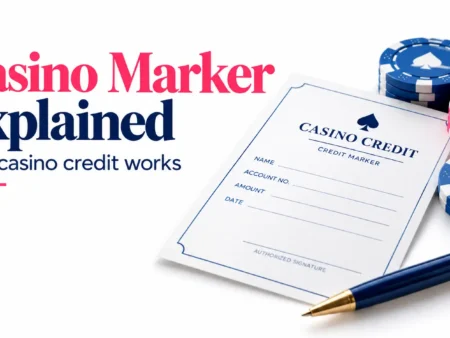
A casino first approves a credit line, and the marker represents a specific amount drawn against that available credit. Insurance is an optional side bet on whether the dealer has blackjack.
It is typically offered when the dealer’s visible card, or upcard, is an Ace. For the dealer to complete blackjack, the hidden hole card must be worth 10: a 10, Jack, Queen or King.
The important distinction is that insurance is separate from your main blackjack wager. It does not improve your cards or change the outcome of your hand. Instead, you are placing another bet on one specific outcome:
The dealer has a 10-value card behind the Ace.
Under conventional blackjack rules, insurance may be wagered for up to half the original bet and pays 2:1 when the dealer has blackjack. These mechanics are also set out in the Wizard of Odds blackjack rules.
If the dealer does not have blackjack, the insurance wager loses and the main hand continues.
The exact dealing sequence can differ between variantes de blackjack, so the rules of the specific table determine when and how dealer blackjack is checked or resolved.
How Does Blackjack Insurance Work?
Suppose you place a €/$20 main wager and the dealer shows an Ace.
Insurance is offered for up to half that amount, so the maximum insurance wager is:
€/$10
The two wagers are then resolved separately.
Blackjack Insurance Example
| Dealer outcome | Main wager | Insurance wager | What happens |
| Dealer has blackjack | −€/$20* | +€/$20 profit | Insurance offsets the main-wager loss |
| Dealer does not have blackjack | Continues | −€/$10 | The main hand continues normally |
*Assuming you do not also have blackjack.
If the dealer has blackjack, the €/$10 insurance wager earns €/$20 in profit at 2:1. The €/$10 insurance stake is also returned.
Your original €/$20 wager still loses. Insurance does not turn the main wager into a push; its profit compensates for that loss.
If the dealer does not have blackjack, the €/$10 insurance wager loses. Your €/$20 main bet then continues and can still win, push or lose.
This is why the word “insurance” can be misleading. It covers one specific dealer outcome rather than protecting your hand from losing generally.


The Math Behind Blackjack Insurance
A 2:1 payout only tells part of the story. To judge the wager, you also need to know how often it must win.
Why 33.33% Is the Break-Even Point
Consider a €/$1 insurance wager.
If it wins, you make €/2inprofit.Ifitloses,youlose€/1.
For the expected value to equal zero:
(Probability of winning × €/2)-(Probability of losing × €/1) = €/$0
The break-even probability is therefore:
33.33%
Insurance needs to win more than one-third of the time to have positive expected value.
House Edge in a Six-Deck Example
A six-deck shoe starts with 312 cards. Of those, 96 are 10-value cards: the 10s, Jacks, Queens and Kings.
In a simplified example where the dealer’s Ace is the only known card, 311 cards remain unknown. The probability that the dealer’s hole card is worth 10 is:
96 ÷ 311 = 30.87%
That falls below the 33.33% break-even threshold.
At 30.87%, a €/$1 insurance wager has an expected loss of approximately €/$0.074, equivalent to about a 7.4% house edge on the insurance wager. The same 30.87% probability and approximately 7.40% disadvantage are shown in the Wizard of Odds insurance analysis.
This is an illustrative calculation rather than a universal probability for every hand. Your cards and any other exposed cards have already been removed from the shoe, so they change the exact composition of the cards that remain.
There is also an important distinction:
The 7.4% figure is not the house edge of blackjack as a whole.
It applies to the insurance wager under the assumptions above. The house edge of the main game varies with rules such as the blackjack payout, number of decks, dealer actions, doubling and splitting. Those differences are part of what separates stronger and weaker blackjack games and table rules.


Should You Take Insurance in Blackjack?
If you are following basic strategy and are not tracking the composition of the remaining cards, the standard decision is to decline insurance.
The issue is not that insurance cannot win. It can. The problem is that under normal shoe composition, the probability of a 10-value hole card does not justify a 2:1 payout over time.
Your decision should not change merely because:
- you have a strong hand you do not want to lose;
- your hand looks weak;
- you have lost several rounds;
- or a 10 feels “due”.
A run of recent dealer blackjacks does not by itself make another blackjack due either. What can affect the probability is which specific cards have already been removed from the shoe.
That is a question of card composition, not streaks.
Does Your Hand Matter for Insurance?
The strength of your hand does not determine whether insurance is good value.
Suppose you have 20 and the dealer shows an Ace. It can feel sensible to insure such a strong hand because losing a 20 to dealer blackjack is frustrating.
But insurance is not priced according to the strength of your total. It depends on the probability that the dealer’s hidden card is worth 10.
Consider a 20 made from:
King + Queen
Both cards are worth 10 and have already left the shoe. They cannot also be the dealer’s hole card.
Using the same simplified six-deck example, once the dealer’s Ace, your King and your Queen are known, there are:
94 10-value cards among 309 unknown cards
That gives a probability of approximately:
30.42%
So in this example, holding two 10-value cards actually makes a 10-value dealer hole card slightly less likely than when those cards were still unknown.
Isto é um card-removal effect.
Your cards can therefore affect the insurance calculation because they change the composition of the remaining shoe, not because a total of 20 deserves more protection than a total of 16.


When Can Insurance Be Worth Taking?
CInsurance can become mathematically favourable when more than one-third of the unknown cards are worth 10.
If enough lower cards have already been dealt, the remaining shoe may contain an unusually high proportion of 10s, Jacks, Queens and Kings. Once the probability of a 10-value hole card moves above 33.33%, a 2:1 insurance wager has positive expected value.
Card counting can be used to estimate when the composition of the remaining shoe has shifted far enough for that to happen.
With the widely used Hi-Lo system, insurance has an index of true count +3 in the commonly cited Illustrious 18 strategy deviations. The Wizard of Odds Hi-Lo card-counting guide lists insurance at +3.
That does not make +3 a universal rule. Different counting systems and playing conditions can use different indices.
The more useful principle is:
Insurance becomes favourable when reliable information about the remaining cards pushes the probability of a 10-value hole card above 33.33%.
Without that information, the basic-strategy decision remains to decline it.
Is Even Money the Same as Insurance?
On a conventional game where blackjack pays 3:2, accepting even money when you have blackjack against a dealer Ace is mathematically equivalent to taking maximum insurance.
Suppose your original wager is €/$20 and you receive blackjack.
At 3:2, the blackjack pays €/$30 in profit if the dealer does not also have blackjack. Now compare the two possible outcomes after placing €/$10 insurance:
| Dealer outcome | Main blackjack | Insurance | Total profit |
| Dealer also has blackjack | Empurrar | +€/$20 | +€/$20 |
| Dealer does not have blackjack | +€/$30 | −€/$10 | +€/$20 |
Either way, you finish with €/$20 profit – the same 1:1 return offered by even money.
For a basic-strategy player who is not counting cards, declining even money therefore follows the same mathematical reasoning as declining insurance.
This equivalence assumes a 3:2 blackjack payout. Different payout structures change the calculation, so the table rules matter.
The Math Matters More Than the Name
Insurance is ultimately a side bet on the dealer holding a 10-value card behind an Ace.
Its 2:1 payout requires a probability above 33.33% to have positive expected value. Without reliable information showing that the remaining cards have crossed that threshold, basic strategy says to decline the bet.
A strong hand, a losing streak or the feeling that a 10 is due does not change that calculation.
18+ | Jogue com responsabilidade.
FAQs About Blackjack Insurance
If the dealer has blackjack and you do not, your original wager normally loses.
For example, with a €/$20 main wager e €/$10 insurance, the main bet loses €/$20 while insurance earns €/$20 in profit. The insurance win offsets the loss; it does not change the original wager into a push.
Yes. If the dealer does not have blackjack, the insurance wager loses immediately. Your main hand then continues and can also lose later in the round.For example, you could lose €/$10 on insurance and then lose the €/$20 main wager if the dealer ultimately beats your hand.
No. Under conventional blackjack rules, insurance may be placed for up to half of the original wager rather than requiring the maximum amount. With a €/$20 main wager, the maximum insurance wager would normally be €/$10.
When you have blackjack and the dealer shows an Ace, many games present the choice as even money. On a standard 3:2 game, accepting even money is mathematically equivalent to taking maximum insurance.
Insurance is a separate wager with its own expected value. Under normal card composition, adding insurance introduces a negative-expected-value side bet rather than improving the house edge of the main blackjack hand. The calculation can only become favourable when the remaining cards contain a sufficiently high proportion of 10-value cards.